
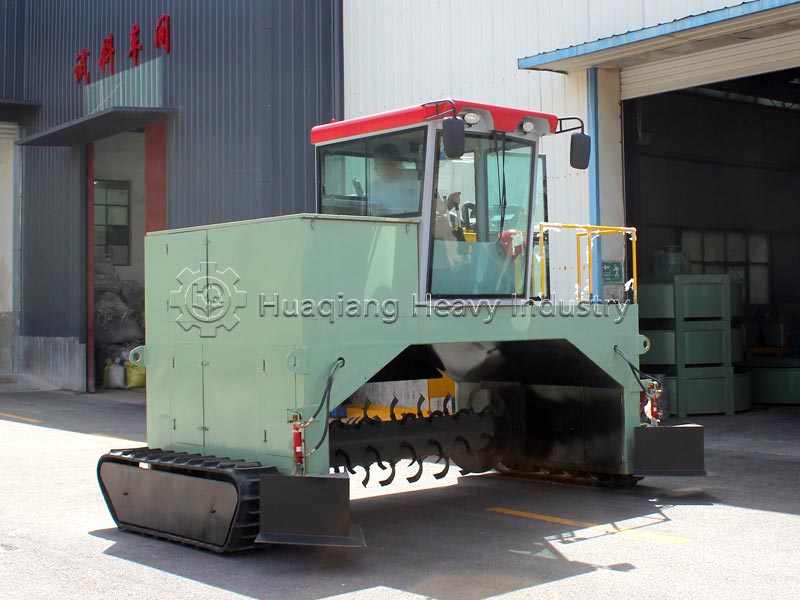
Renowned for its strong traction and resistance to getting stuck in materials, the crawler-type compost turning machine is widely utilized in organic waste composting. The preparatory work undertaken prior to its operation directly impacts both operational safety and efficiency. Based on practical field experience, we have compiled four core preparatory steps:
1.Material Pre-treatment: Thoroughly mix composting materials—such as livestock and poultry manure, as well as crop straw—and remove any hard objects (e.g., stones or rigid plastics) to prevent scratching the tracks or damaging the equipment through jamming. If the material is excessively wet, dry straw may be mixed in to adjust the moisture content.
2.Equipment Pre-inspection: Focus specifically on checking the tension of the tracks. Additionally, verify the tightness of the turning teeth and inspect the transmission and hydraulic systems for any leaks or abnormal noises. Conduct a dry run (without load) for 1–2 minutes to confirm that the equipment is functioning normally.
3.Site Clearance: Clear the designated operating area of any debris or obstacles. Level the ground surface to prevent the tracks from snagging or the machine from getting stuck. Furthermore, plan the spacing between compost piles and designate a clear safety zone for operations.
4.Personnel Preparation: Operators must be thoroughly familiar with the operational procedures. Unauthorized operation is strictly prohibited. Operators must wear appropriate personal protective equipment (PPE), adhere strictly to safety protocols, anticipate potential issues that may arise during operation, and be prepared to execute emergency response measures.
By diligently completing the above preparations, you not only protect the crawler-type compost turning machine and extend its service life but also ensure operational safety, thereby enabling the windrow compost turning machine to perform at its maximum efficiency.