
The large wheel compost turning machine serves as a core piece of equipment in commercial-scale composting operations, distinguished by its exceptional operational efficiency. However, given the substantial size of its turning wheel and its wide operational radius, both safety and operability directly impact the quality of work as well as the safety of personnel and equipment. These two factors are mutually reinforcing; drawing upon practical field experience, this discussion outlines two key insights regarding them.
Safety constitutes the absolute baseline for operations; its core principle lies in “preventing hazards and adhering to protocols.” When the large wheel compost turning machine is operating at high speeds, the area surrounding the turning wheel poses a significant risk. Therefore, prior to commencing work, the site must be cleared of debris and a designated safety zone established, with strict prohibitions against unauthorized personnel approaching the machinery. During operation, personnel must strictly avoid touching the turning wheel or any transmission components to prevent clothing or limbs from becoming entangled. Furthermore, regular inspections of the wheel’s fastening integrity and the braking system are essential. Any anomalies—such as unusual noises or loose components—must be promptly investigated and rectified to prevent equipment malfunctions from triggering safety accidents.
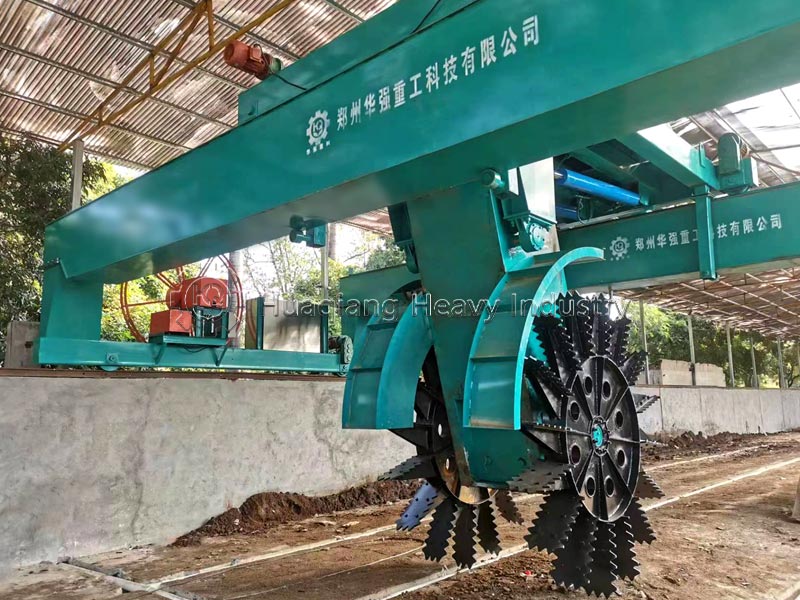
Operability is the decisive factor in operational efficiency. Although this equipment is physically large, it features a low operational threshold, allowing even novice operators to master its use after receiving only brief instruction. Core operations focus primarily on adjusting the turning depth and travel speed to accommodate various types of composting materials and windrow dimensions. The machine offers flexible maneuverability, requires no complex calibration, allows for rapid switching between work zones, simplifies operational workflows, and effectively reduces labor costs.
In summary, safety serves as the fundamental baseline for operations, while operability is the key to efficiency; neither can be compromised. By adhering to standardized operating procedures and conducting regular hazard assessments, operators can not only safeguard the safety of personnel and equipment but also fully harness the capabilities of the large wheel compost turning machine, thereby ensuring the efficient and smooth operation of commercial-scale composting facilities.