
Distinguished from other types of compost turning machines by its exceptional wear resistance, rugged durability, resistance to material jamming, and stable operation, the chain compost turning machine excels at processing organic waste with complex compositions. Its application scenarios precisely address the composting requirements of small-to-medium scale operations, offering a high degree of practical utility.
Its primary application lies in the treatment of high-moisture, viscous livestock and poultry manure. Ideal for livestock farms and small-scale centralized manure treatment sites, the machine efficiently turns and aerates highly viscous waste—such as pig and cattle manure—preventing it from adhering to the equipment and facilitating its harmless conversion without the need for complex pre-treatment.
A secondary application involves the composting of agricultural and forestry waste containing impurities. Field crop stalks, withered branches, and fallen leaves are often mixed with soil clumps and debris; the chain compost turning machine, with its high impact resistance and tangle-free design, can directly turn and process such materials. This makes it well-suited for centralized rural straw processing and the resource-efficient utilization of landscaping waste.
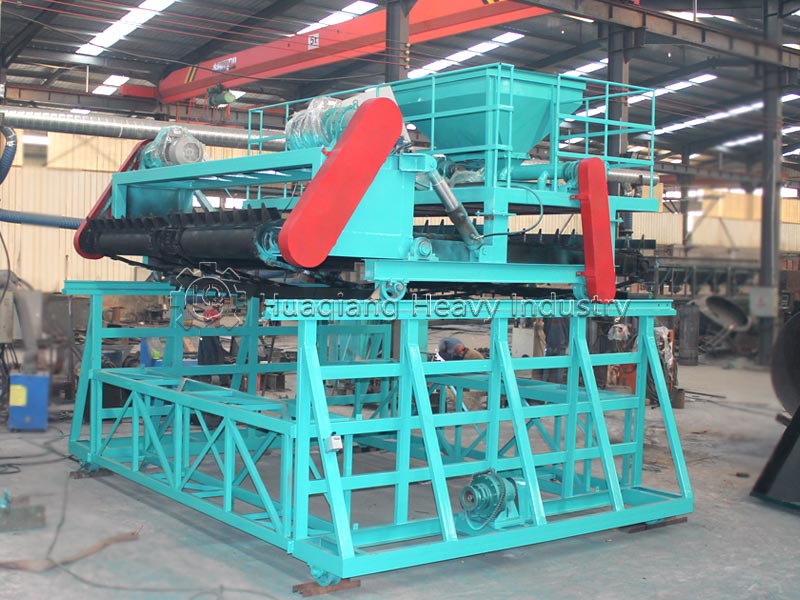
Furthermore, the machine handles mixed organic waste processing with ease—whether involving a blend of manure and crop stalks, or a mixture of kitchen waste and sewage sludge. It ensures uniform turning and aeration to regulate the carbon-to-nitrogen ratio, thereby meeting the diverse composting demands of small-to-medium scale organic fertilizer plants and community waste treatment centers.
Additionally, it is well-suited for small-scale trough composting operations. Requiring no extensive site modifications, the machine offers simple operation and convenient maintenance, making it ideal for independent farmers and small-scale cultivation bases producing compost for their own use. Fundamentally, it targets scenarios involving “complex materials combined with small-to-medium scale composting,” effectively resolving the common pain points associated with standard compost turning machines—specifically, material jamming and susceptibility to damage.