
Slow composting not only delays the use of organic fertilizer but also easily breeds pathogens, a problem faced by both farmers’ self-composting and the early fermentation stages of organic fertilizer production lines. Adding readily available materials appropriately, along with the assistance of an organic fertilizer compost turning machine, can accelerate decomposition and improve quality.
First Type: Carbon-to-Nitrogen Ratio Adjuster: A balanced carbon-to-nitrogen ratio is crucial for composting. Adding dry straw, sawdust, or other carbon sources, or urea, chicken manure, or other nitrogen sources, balances nutrients, provides energy for microorganisms, and prevents composting stagnation.
Second Type: Microbial Agents: Adding specialized composting agents can quickly replenish beneficial microorganisms, breaking the slow process of natural fermentation, accelerating material decomposition, reducing odors, and shortening the decomposition cycle by more than 30%.
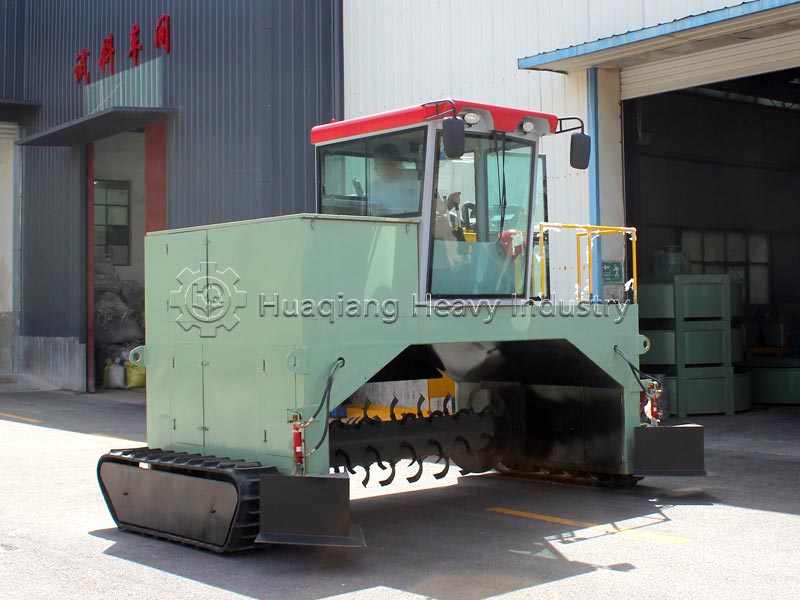
Third Type: Loose and Aerated Materials: Lack of oxygen leads to slow decomposition and foul odors. Adding chopped branches, perlite, etc., can increase aeration. In large-scale organic fertilizer production lines, using a windrow compost turning machine ensures even distribution of aerated materials, improving efficiency.
The fourth type of moisture regulator: Both excessively dry and excessively wet compost will slow down the process. For dry compost, add clean water and composting liquid; for excessively wet compost, add dry soil and sawdust, maintaining a moisture content of 50%-60%.
Note: Additives must be added in appropriate amounts to avoid nutrient imbalance. Turning the compost will enhance the effect; an organic fertilizer compost turning machine can be used, suitable for the large-scale needs of organic fertilizer production lines. In summary, by appropriately adding these four types of materials and using turning as an aid, high-quality organic fertilizer can be quickly produced.