
Many composting practitioners often grapple with the question: are double screws compost turning machines better suited for large-scale operations or for small-to-medium enterprises (SMEs)? In reality, there is no absolute answer; the suitability of the equipment depends primarily on the scale of composting, the characteristics of the raw materials, and specific production requirements. While these machines are generally better aligned with the needs of SMEs, they can also provide significant auxiliary value within specific scenarios at large-scale enterprises.
The core characteristics of a double screws compost turning machine include precise turning, uniform mixing, and low energy consumption. With a moderate single-unit processing capacity, no need for complex site modifications, and ease of operation and maintenance, the machine aligns perfectly with the requirements of SMEs. SMEs typically engage in small-batch, precision-oriented composting, placing a strong emphasis on compost maturity quality and cost control—objectives that the double screws compost turning machine is ideally equipped to meet.
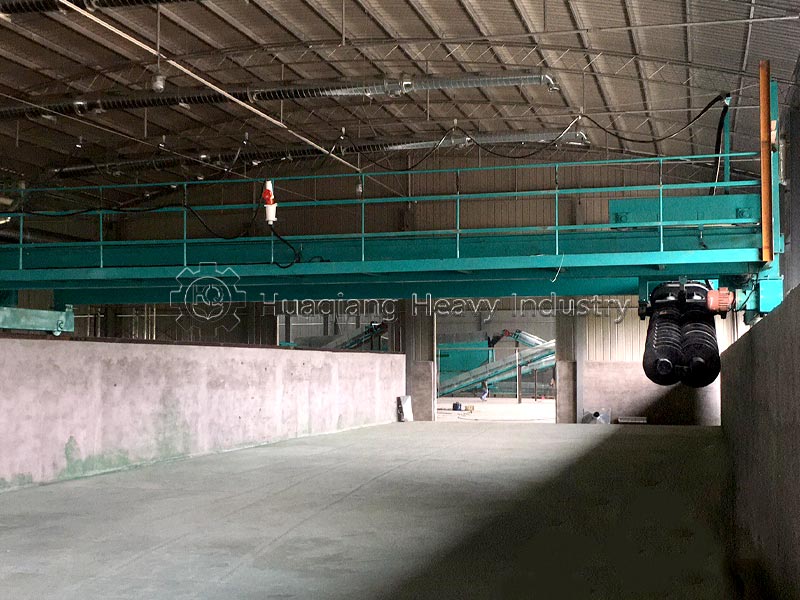
Large-scale enterprises, characterized by massive composting volumes and a focus on high efficiency, typically opt for heavy-duty machinery such as large-scale wheel-type compost turning machines. However, when processing highly viscous or high-fiber materials—or when specific precision fermentation is required—the double screws compost turning machine can serve as a valuable auxiliary tool. It effectively compensates for the limitations of larger equipment (such as uneven mixing) and is well-suited for specific, precision-intensive segments of the composting process.
The machine offers flexible model options capable of adapting to various niche scenarios across different scales; however, its core strength remains in precision processing rather than in massive-scale, bulk operations.
In summary, the double screws compost turning machine is the preferred choice for SMEs seeking precision composting solutions, while large-scale enterprises can utilize it as a supplementary tool to achieve a balance between high efficiency and meticulous processing.