
In planting, fertilizer is the “nutrient” for crop growth; choosing the right fertilizer is crucial for improving quality and yield. There are many fertilizers on the market, but the most commonly used are organic fertilizers, chemical fertilizers, and bio-fertilizers. They have different characteristics and complementary advantages.
The first type is organic fertilizer, which focuses on “improving and nourishing the soil.” Its raw materials are natural materials such as livestock manure and straw. After composting and fermentation, it is processed through standardized organic fertilizer production lines, resulting in fertilizers rich in organic matter and trace elements. It can improve soil, enhance fertility, and alleviate compaction. It is suitable for long-term application and is compatible with various crops, especially beneficial for improving the quality of fruits and vegetables.
The second type is chemical fertilizer, which focuses on “rapid fertilization.” It contains macronutrients such as nitrogen, phosphorus, and potassium. It comes in single-element and compound forms, processed through NPK fertilizer production lines. It is high in nutrients, fast-acting, and can quickly alleviate nutrient deficiencies in crops. It is suitable for topdressing crops and is suitable for large-scale field planting, offering high efficiency and convenience.
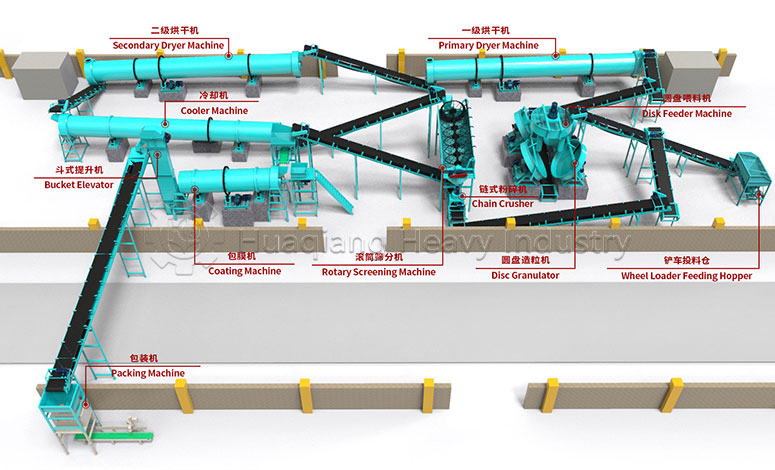
The third type is bio-fertilizer, which focuses on “active empowerment.” Rich in beneficial microorganisms and prepared using a bio-organic fertilizer production line, this fertilizer can activate soil nutrients, promote crop absorption, inhibit harmful bacteria, and reduce pests and diseases. It provides both supplemental fertilization and soil nourishment, making it suitable for degraded soils and fields subjected to continuous cropping.
In summary, each of the three fertilizers has its own focus: organic fertilizer nourishes the soil, chemical fertilizer supplements fertilization, and bio-fertilizer enhances soil function. By flexibly combining these fertilizers according to soil and crop needs, high yields can be guaranteed while preserving long-term soil fertility.