
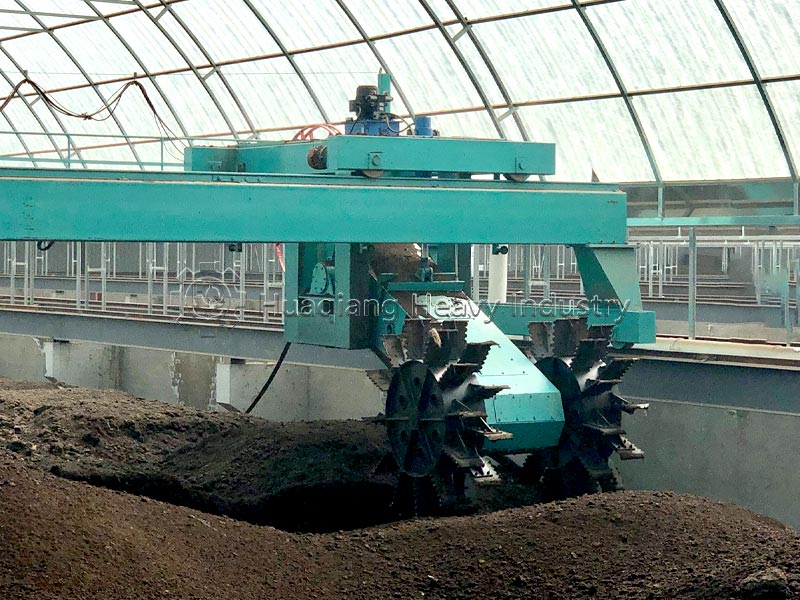
Spoiled organic fertilizer loses its effectiveness, carries pathogens, and damages crop roots. High-quality organic fertilizer is processed according to standardized production lines and fully decomposed using organic fertilizer production equipment such as large wheel compost turning machines. Spoiled fertilizer deviates from these standards. No professional testing is needed; four intuitive methods can quickly determine its quality and prevent misuse.
Observe Appearance: High-quality organic fertilizer processed on a production line and decomposed using a large wheel compost turning machine is brown or dark brown, with loose and uniform granules. If it is black, sticky, severely clump-like, or has white or green mold, it has spoiled.
Smell for Decomposition: High-quality organic fertilizer has only a faint, fermented, fishy smell. If it has a strong sour, rotten, or ammonia-like smell, fermentation is incomplete or it has spoiled, and its application will burn crops.
Feel for Dryness/Wetness: Normal organic fertilizer is loose and dry, crumbling easily when grasped. If it is sticky, damp, and water can be squeezed out, and it clumps and is difficult to break up, it indicates improper storage or spoilage.
A simple test to check activity: High-quality organic fertilizer dissolves slowly in water, leaving the water cloudy but without any foul odor; if it settles quickly, the water turns black, and has an unpleasant smell, it indicates spoilage and loss of effectiveness.
Furthermore, high-quality organic fertilizer, after processing at the end of the organic fertilizer production line, exhibits good stability and should be stored in a dry, well-ventilated place. Mastering these methods allows for quick assessment of whether organic fertilizer has spoiled, ensuring the selection of high-quality fertilizer for soil improvement.