
In the field of aerobic fermentation of organic waste, the introduction of hydraulic technology has revolutionized compost turning equipment. The hydraulic trough compost turning machine, with its unique working principle and performance characteristics, has become a new favorite technology for medium and large-scale fermentation projects.
The core principle of this equipment is “hydraulic drive + mechanical execution.” Powered by a hydraulic pump station, the turning arm is raised and lowered via oil cylinders, driving the turning drum deeper into the material. The toothed rakes on the drum forcibly excavate, lift, and throw the bottom material backward, allowing the material to fully contact oxygen in the air before being re-piled.
In terms of performance characteristics, firstly, it boasts strong thrust. The hydraulic system outputs enormous torque at low speeds, easily penetrating compacted materials 1.5-2.5 meters deep. Even with high-viscosity livestock manure or sludge, it will not get stuck, and the turning speed can be adjusted in real time.
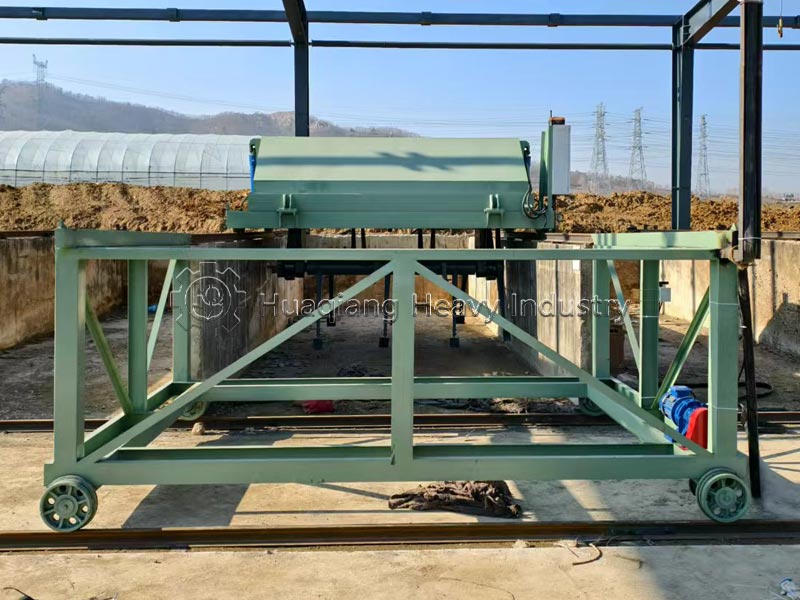
Secondly, it operates smoothly and reliably. Hydraulic buffering technology effectively absorbs impact loads, reducing equipment vibration damage. Key components adopt a sealed structure, adapting to high-dust, high-humidity fermentation environments, significantly reducing the failure rate.
Furthermore, it has a high degree of automation. The electro-hydraulic control system enables one-button start/stop, automatic reciprocating motion, and preset turning depth. Some models support remote monitoring and self-diagnosis of faults, significantly reducing manual intervention.
With its powerful thrust, stable operation, intelligent control, and energy-saving and environmentally friendly features, the hydraulic trough compost turning machine is redefining the technical standards for trough-type aerobic fermentation.