
Simple trough compost turning machines, with their simple structure and low cost, have become commonly used equipment in small and medium-sized waste treatment plants. Their core value lies in their ability to efficiently process a wide variety of organic materials, achieving resource conversion from waste.
Livestock and poultry manure is the most common processed material. Fresh manure such as chicken and pig manure has high moisture content and viscosity, easily producing foul odors when directly piled. Through trough composting, the equipment evenly mixes the manure with auxiliary materials such as straw, supplementing oxygen during turning and promoting aerobic fermentation, allowing the manure to quickly heat up and mature, achieving harmless treatment and conversion into organic fertilizer.
Crop straw is also an important processing target. Corn stalks, rice straw, etc., have high lignocellulose content and degrade slowly naturally. The turning mechanism thoroughly mixes the straw with nitrogen-based auxiliary materials, tearing the fiber surface during high-temperature fermentation, accelerating cellulose decomposition, shortening the maturation cycle, solving the incineration problem, and producing soil conditioners.
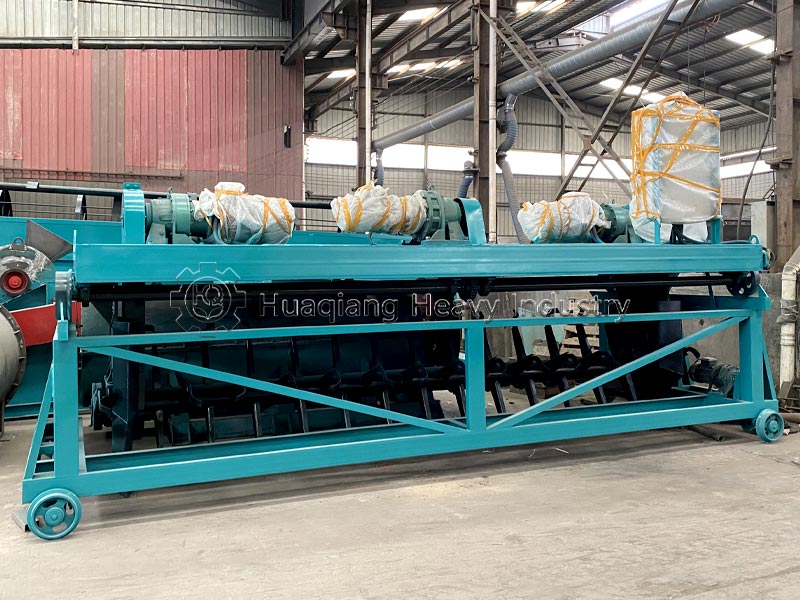
Kitchen waste and municipal sludge have high organic matter content, but their moisture content fluctuates greatly. By regularly turning and turning the compost, the equipment effectively evaporates excess moisture, prevents material caking, maintains suitable permeability, and, with the help of auxiliary materials to adjust the carbon-nitrogen ratio, rapidly stabilizes the material, transforming it into safe nutrient-rich soil.
Furthermore, it is also suitable for industrial byproducts such as sugar mill filter mud, medicinal residue, and distiller’s grains. These materials are often sticky or have long, coarse fibers; the forced mixing action of the simple trough-type compost turning machine breaks up agglomerates, ensuring full contact between various wastes and conditioning agents for synergistic fermentation.
With its wide adaptability to various materials, the simple trough-type compost turning machine is becoming a bridge connecting organic waste and resource-based products, playing a vital role in circular agriculture.