
The degree of raw material decomposition and nutrient activation are core factors affecting fertilizer utilization efficiency. Achieving significant improvements is difficult with only microbial fermentation bacteria or a single composting machine. The synergistic effect of biological transformation and physical regulation, however, can fundamentally improve the quality of organic fertilizer and nutrient utilization efficiency, making it a key optimization direction in composting production.
Microbial fermentation bacteria are central to nutrient activation, converting large organic molecules in raw materials into readily absorbable nutrients for plants. They can also activate nutrients fixed in the soil, but require a suitable growth environment. The compost turning machine provides this environment: through uniform mixing, it supplies oxygen, regulates the compost pile to the optimal temperature of 55-65°C, and ensures sufficient contact between bacteria and raw materials, preventing uneven fermentation.
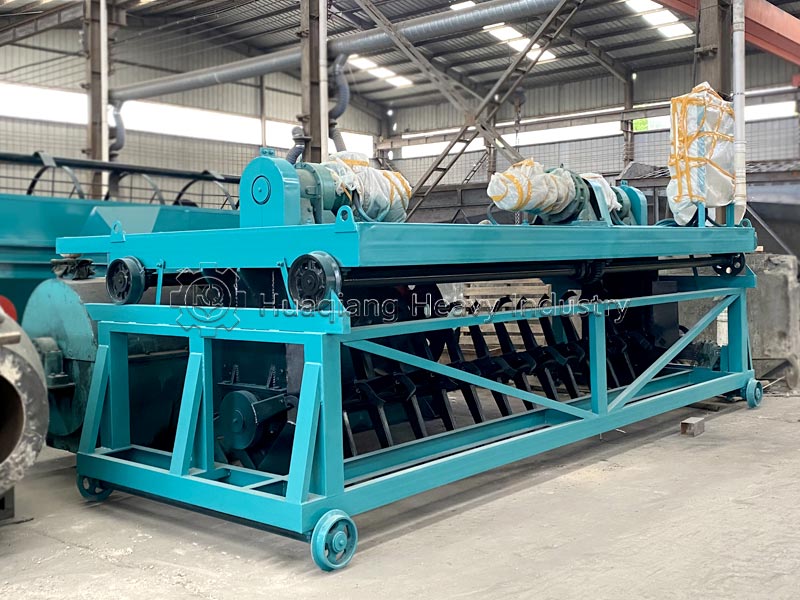
The synergy of both significantly improves fertilizer utilization efficiency: the suitable environment created by the equipment maximizes bacterial activity, accelerating nutrient transformation; the heat generated by bacterial decomposition reduces energy consumption. Ultimately, this shortens the composting cycle, increases the content of readily available nutrients in organic fertilizer by more than 30%, and reduces nutrient loss. When applied to the soil, the activated nutrients are more easily absorbed by plants, achieving the goal of “thorough fermentation and efficient nutrient utilization.” It is important to note that the appropriate microbial strain must be matched to the type of raw material, and the frequency of compost turner machine operation should be dynamically adjusted based on the temperature and humidity of the compost pile to maximize the synergistic effect.