
In the field of organic fertilizer production, equipment integration has become a key trend for reducing costs and increasing efficiency. The emergence of the new type two in one organic fertilizer granulator is fundamentally changing traditional production models. This equipment, which integrates mixing and granulation functions, not only solves the problem of high material transfer losses in traditional production lines but also becomes the preferred choice for small and medium-sized fertilizer plants seeking intensive production.
Compared to single-function fertilizer granulators, the two-in-one equipment seamlessly connects the mixing and granulation stages, eliminating the need for intermediate conveying equipment. Material loss rate is reduced from the traditional 5%-8% to 1%-2%, while saving 30%-50% of floor space. Its core advantage lies in its strong adaptability; whether processing livestock and poultry manure, straw, or other organic waste, or producing bio-organic fertilizers, parameters can be flexibly adjusted through the PLC control system without requiring large-scale equipment modifications.
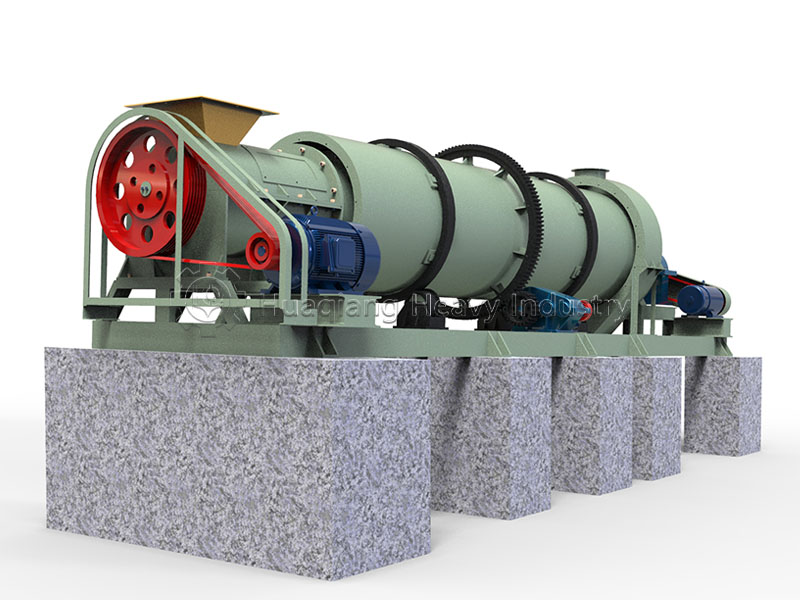
In terms of production efficiency, a single machine can produce 1-5 tons of granular organic fertilizer per hour, an increase of 20%-40% compared to traditional separate equipment. The granules have a sphericity of over 85% and a strength of 10-30N, meeting the transportation and application needs of farmland and orchards. Even more noteworthy is the 15%-25% reduction in energy consumption per unit of product, reducing the number of motors and labor costs, perfectly aligning with the current pursuit of low cost and high output in fertilizer plants.
For companies planning to expand their organic fertilizer production lines, this equipment can also be integrated with NPK fertilizer production lines to process organic-inorganic compound fertilizers. Today, more and more fertilizer plants are incorporating this two-in-one granulator into their production upgrade plans, promoting the resource utilization of organic waste while injecting new impetus into the development of green agriculture.