
Dry granulation is an environmentally friendly and efficient production process for compound fertilizers. It requires no high-temperature drying or additional water, relying on mechanical pressure for shaping. It is suitable for the production of both general-purpose and specialty compound fertilizers on NPK fertilizer production lines. The core aspects are formula adaptation and process parameter control.
Dry granulation of NPK compound fertilizers focuses on nutrient uniformity and granule strength. Nitrogen, phosphorus, and potassium raw materials are crushed and screened, then mixed according to the formula ratio, and fed into a double roller press granulator to be pressed into sheets. These sheets are then crushed and screened to obtain uniform granules. Strict control of raw material fineness and mixing is necessary to avoid nutrient segregation. This process is suitable for general-purpose field fertilizers, resulting in high granule strength and resistance to caking, meeting the needs of large-scale production lines.
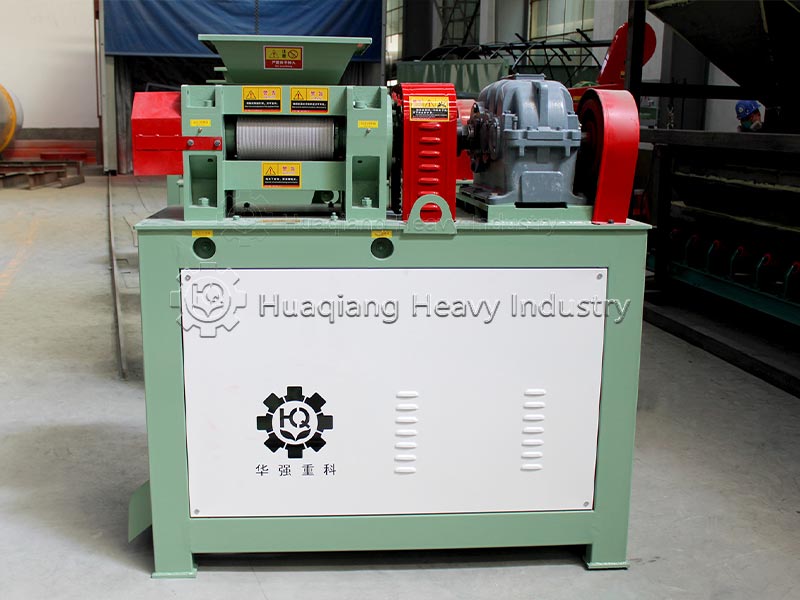
Dry granulation of specialty compound fertilizers requires adaptation to customized formulas, often including the addition of trace elements and microbial agents. During granulation, pressure parameters need to be optimized to avoid damaging heat-sensitive components. Extrusion or roller press granulation equipment is used, and granule size is adjusted to suit precision farming, ensuring that special nutrients are not lost and that fertilizer efficacy is precisely released.
For both types of granulation and production line operation, two key points must be controlled: raw material moisture content should be controlled at 5%-8% to avoid adhesion or difficulties in molding; and equipment should be regularly inspected to ensure uniform granules. Dry granulation has low energy consumption and produces no wastewater, meeting the environmental requirements of the production line.
In summary, the core of dry granulation for both types of fertilizers is formula adaptation to the process. NPK compound fertilizers are adapted for large-scale production lines, while specialty fertilizers prioritize the protection of special nutrients.