
Temperature is a core control indicator in organic fertilizer composting. An optimal high temperature of 55-65°C effectively kills pathogens and promotes decomposition, while slow heating, excessively high temperatures, or large temperature fluctuations directly affect quality. Based on the organic fertilizer production line process and equipment compatibility, the following are targeted temperature control solutions:
Slow temperature rise: The key is to ensure sufficient oxygen supply and balanced raw materials. Core equipment can include hydraulic trough-type or double screws compost turning machines, which improve aeration through high-frequency, uniform mixing, ensuring sufficient oxygen for aerobic fermentation. Simultaneously, adjust the carbon-nitrogen ratio of the raw materials to 25:1-30:1, and add auxiliary materials such as straw to adjust the moisture content to 50%-60%, facilitating rapid temperature increase.
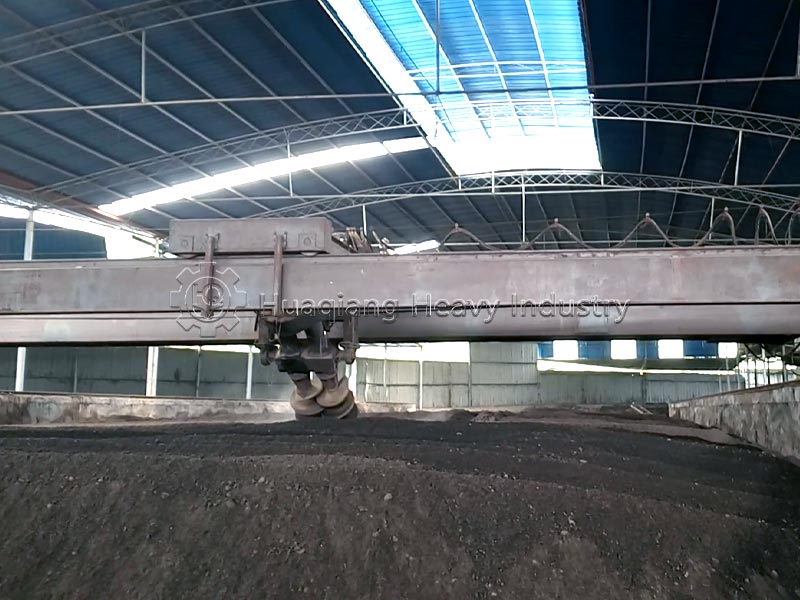
Excessively high temperature (above 70°C): The key is heat dissipation and oxygen control. During fermentation, the frequency of turning can be increased using a turning machine to break up clumps and dissipate heat; in enclosed fermentation tanks, ventilation devices can be activated to regulate oxygen and inhibit excessive fermentation. Adding cooling auxiliary materials can also balance the temperature and prevent nutrient degradation.
Large temperature fluctuations: The focus is on precise equipment control and environmental protection. Use a turning machine with intelligent temperature control to automatically adjust operating parameters based on real-time temperature; for open-air production lines, construct sunshades to avoid sudden temperature changes caused by heavy rain or direct sunlight, and regularly monitor and fine-tune the process to maintain overall stability.
In summary, temperature control requires the coordinated efforts of organic fertilizer production equipment adaptation and process adjustment. By relying on professional equipment to ensure temperature control accuracy and using scientific formulations, the optimal fermentation temperature can be stably maintained, producing high-quality organic fertilizer.