
As a core organic fertilizer compost turning machine, the self-propelled compost turning machine is widely used in organic fertilizer fermentation scenarios due to its flexibility, convenience, and uniform turning capabilities. Proper operation not only improves efficiency and extends equipment lifespan but also prevents safety accidents, ensuring the smooth operation of the organic fertilizer production line.
Before operation, conduct a comprehensive inspection and preparation: Check tire pressure, track tension, and the turning rollers and transmission components to ensure there are no loose or jammed parts; clear debris from the work area, demarcate the work zone, and prohibit unauthorized personnel from entering to ensure the safe operation of the organic fertilizer compost turning machine.
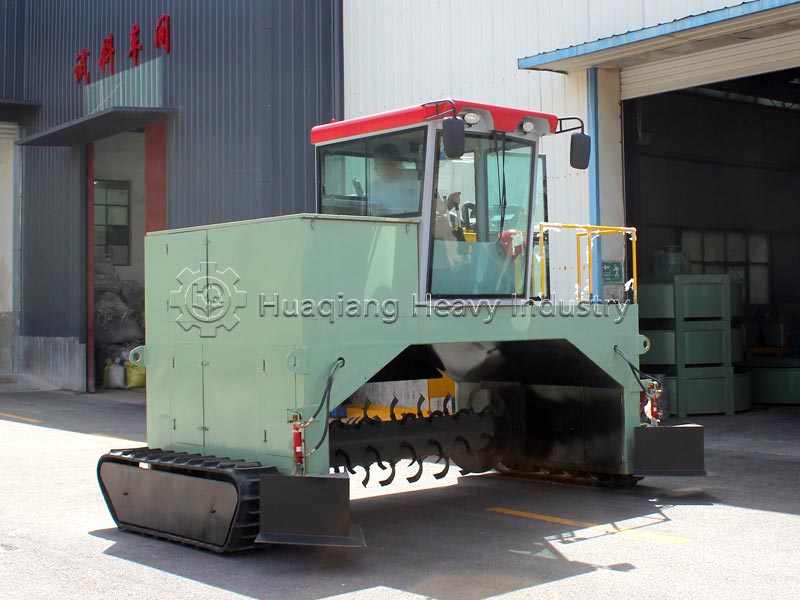
During operation, strictly follow the specifications: After starting, conduct a no-load test run to confirm normal operation before commencing work; maintain a constant speed, adjusting the turning depth according to the material thickness to avoid overloading; keep the compost turn in a straight line, slow down when turning, and avoid sudden turns and stops to prevent equipment damage or disruption to the production line schedule.
After operation, perform thorough cleaning and maintenance: turn off the power, clean the material adhering to the cutter rollers and machine body; check for wear on parts, tighten as needed, and replenish lubricating oil; park the organic fertilizer compost turning machine in a dry, well-ventilated area, protecting it from rain and dust to prevent rust.
Furthermore, operators must wear protective equipment, and operating the machine under the influence of alcohol or while fatigued is strictly prohibited. Do not touch moving parts. In summary, following these requirements ensures safety and maximizes equipment efficiency, supporting the efficient operation of the organic fertilizer production line.