
High-temperature aerobic fermentation is the core process of manure composting for organic fertilizer production. It effectively kills insect eggs and pathogens, and degrades harmful substances. Its efficient implementation relies on the precise adaptation of organic fertilizer production equipment. Scientifically matching the equipment ensures both fermentation effectiveness and improved organic fertilizer quality, achieving efficient resource utilization of manure.
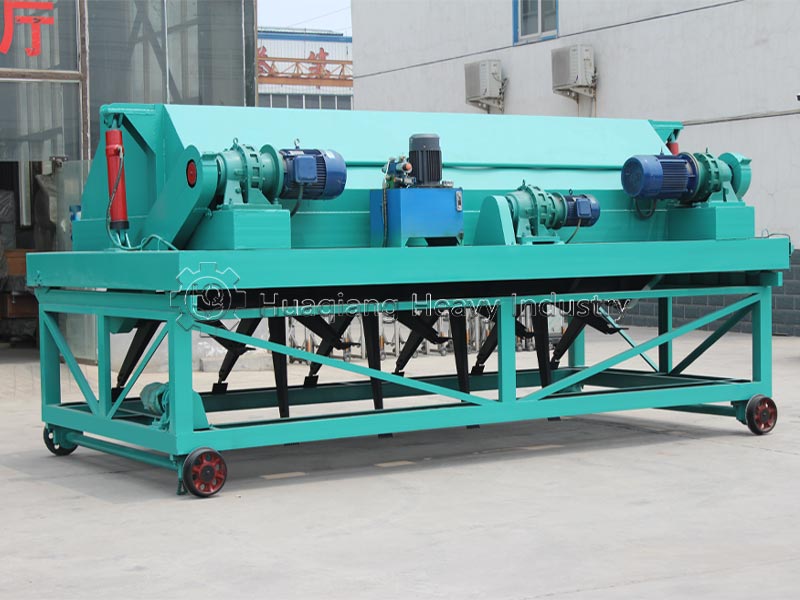
The core fermentation equipment directly determines the quality of the compost. Given the high moisture and viscosity characteristics of manure, hydraulic trough-type compost turning machines or double screws compost turning machines are preferred. These devices can penetrate the material pile for even mixing and precise oxygen supply. Combined with a closed trough body temperature control system, they stably maintain a high-temperature environment of 55-65℃, ensuring complete decomposition of the manure, preventing uneven fermentation caused by clumping, and significantly improving composting efficiency.
Pre-treatment and post-treatment equipment are equally crucial. Manure needs to be processed by a fertilizer crusher to remove impurities and adjust particle size, and then mixed with auxiliary materials such as straw using a fertilizer mixer to balance the carbon-nitrogen ratio, laying the foundation for high-temperature fermentation. After fermentation, screening equipment separates undigested impurities. If granulation is required, a granulator can be used for shaping, significantly improving raw material adaptability and product purity.
The coordinated operation of all equipment is the core of efficient production. From pre-treatment and high-temperature fermentation to finished product processing, various organic fertilizer production equipment are seamlessly integrated, ensuring strict adherence to the process and improving overall efficiency.