
Windrow composting is a widely used, simple, and efficient method for organic fertilizer fermentation. Its core involves piling organic materials into windrows according to specifications, allowing them to decompose through natural ventilation or manual turning. Suitable for small to medium-scale production, it requires no complex equipment and is easy to operate with low costs.
Its core characteristics are “windrow-shaped piles + natural decomposition,” distinguishing it from closed composting. The piles are mostly trapezoidal or triangular, 1-2 meters high and 3-5 meters wide, with the length adjusted as needed. Ventilation space is reserved between the piles to ensure aerobic respiration of microorganisms and promote material decomposition.
The operation process is simple: Mix livestock manure, straw, and other raw materials in a specific ratio, adjust the moisture content and carbon-nitrogen ratio, and pile them into standardized windrows. Regular turning with an organic fertilizer compost turning machine (such as a windrow compost turning machine) replenishes oxygen, regulates temperature and humidity, and accelerates decomposition. No closed system is required throughout the process.
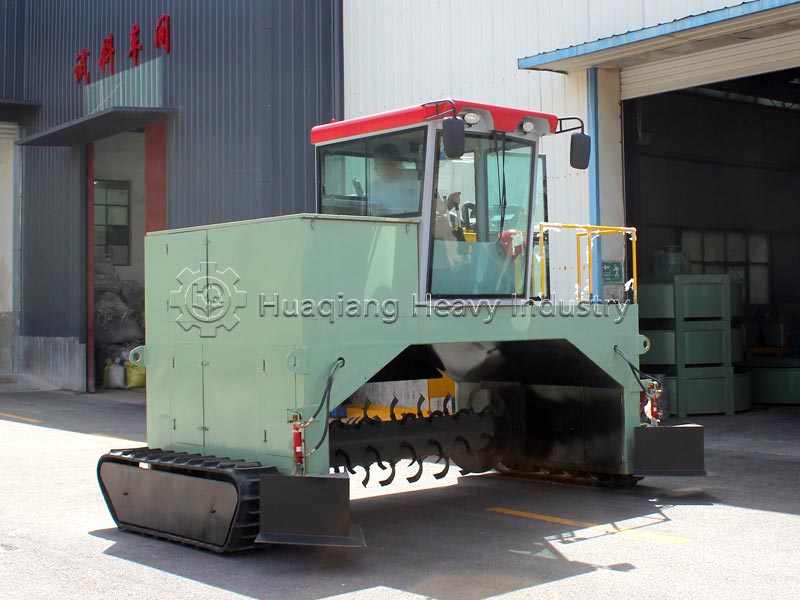
It is adaptable to a wide range of scenarios, suitable for farmers and small- to medium-sized organic fertilizer production, and can be flexibly integrated into the early-stage composting stage of organic fertilizer production lines. It can process various types of organic waste and produce high-quality organic fertilizer, turning waste into treasure.
Its advantages are significant: low equipment investment, simple operation, flexible site requirements, and controllable composting cycle; the composted organic fertilizer can improve soil and enhance fertility, meeting the needs of green planting and is one of the mainstream modes of organic fertilizer fermentation.