
Both the hydraulic trough compost turning machines and simple trough compost turning machines are designed for trough-based composting systems. However, due to differences in configuration and drive mechanisms, their market positioning varies significantly. By identifying these core distinctions, you can quickly match the right machine to your specific composting needs and avoid unnecessary financial waste.
The core differences lie in their drive systems and performance capabilities: The hydraulic trough machine utilizes a hydraulic drive, delivering powerful turning force and ensuring uniform turning depth. It is capable of processing materials that are highly moist, viscous, or prone to clumping, offering stable operation suitable for long-term, continuous use. The simple trough machine employs a basic mechanical drive; while its turning force is moderate and its precision slightly lower, it is better suited for processing loose, easily compostable materials.
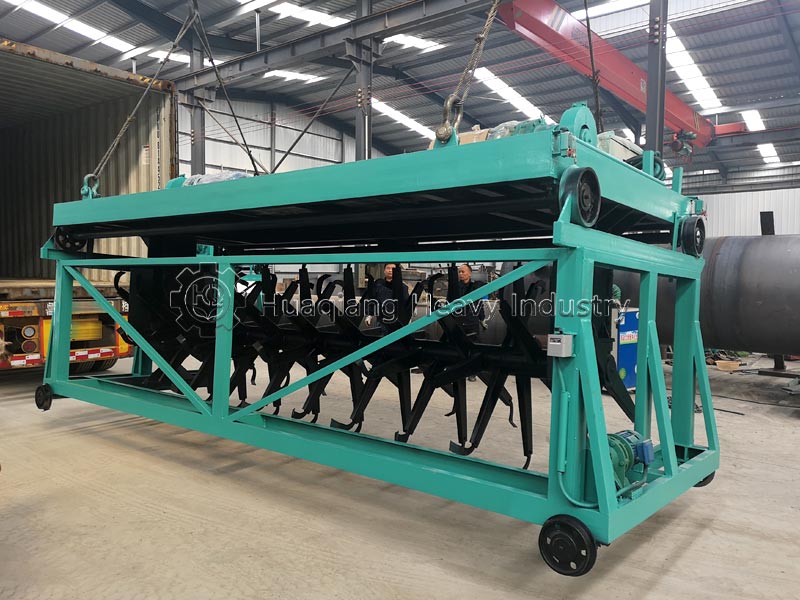
They are suited for different application scenarios: The hydraulic trough machine is ideal for small-to-medium-sized organic fertilizer plants and large-scale waste treatment facilities, meeting the demands of high-volume, precision fermentation. The simple trough machine is better suited for individual farmers and small-scale cultivation bases; it requires no complex site modifications and is perfect for small-batch, self-use composting.
There are also differences in cost and maintenance: The hydraulic trough machine features a precision-engineered structure, resulting in slightly higher initial investment and maintenance costs. The simple trough machine, conversely, has a lower manufacturing cost and a simpler structure, making it easy to operate and maintain—an ideal choice for scenarios with limited budgets.
In summary: for large-scale, precision-controlled fermentation, choose the hydraulic trough compost turning machine; for small-batch, low-cost composting for personal use, the simple trough compost turning machine will suffice.