
Many novice organic fertilizer processors easily confuse ring die pelleting machines and flat die pelleting machines. While the two types of equipment share some similarities in appearance and basic configuration, their core forming structures differ significantly, making them not similar devices.
The similarities between the two are concentrated in their basic auxiliary structures. Both are equipped with a frame, feeding device, pressure roller assembly, and power transmission system. Their granulation principles are the same: both use pressure rollers to compress materials and form granules using die holes. Their basic operation and daily maintenance logic are also similar.
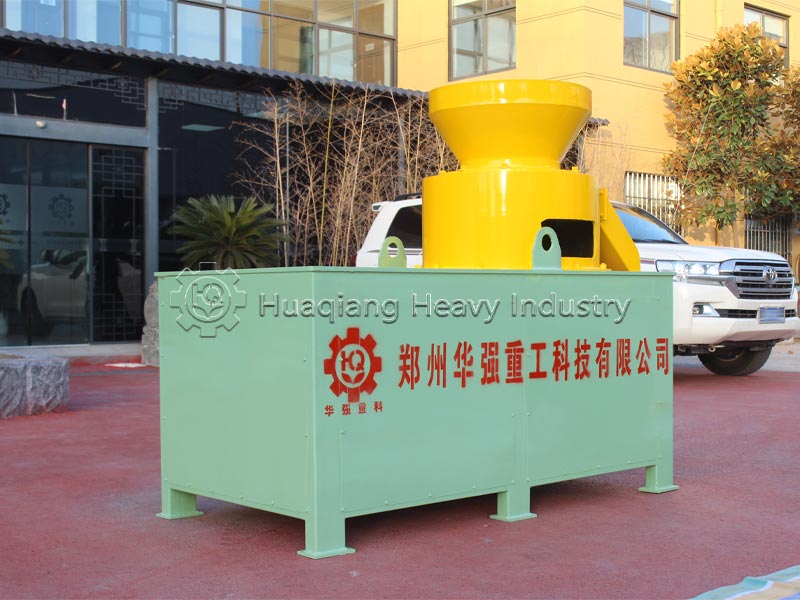
However, their core forming structures are fundamentally different. Flat die pelleting machines use an open, flat plate die. The die is horizontally fixed, and the pressure rollers roll and compress above the plate, resulting in a simple structure that is easy to disassemble, assemble, and adjust the gap. Ring die pelleting machines use a closed, annular die. The cylindrical die encloses the outer side, and the pressure rollers rotate internally, resulting in a more precise overall structure.
These structural differences create different operational advantages. Flat die pelleting machines use vertical extrusion forming, resulting in smooth material discharge, less clogging, and suitability for processing coarse-fiber organic materials. The ring die employs a radial extrusion mode, resulting in greater extrusion force, higher particle density, more uniform shape, and stronger sealing, making it more suitable for the production of fine powders.
In summary, the two devices share only similar basic auxiliary structures; their core forming structures are completely different, classifying them as two independent granulation devices.