
Rotary drum granulators and new type organic fertilizer granulators are core forming equipment in organic fertilizer processing, but their suitable application scenarios differ significantly. Choosing the right equipment based on material characteristics and production scale is key to increasing capacity and controlling production costs.
Regarding material compatibility: Rotary drum granulators are suitable for uniformly proportioned powdery materials and are often used in NPK compound organic fertilizer processing. They require high uniformity in material fineness and moisture content, necessitating fine pretreatment. New type organic fertilizer granulators have a higher tolerance for error and can directly process coarse-fiber, high-moisture organic materials such as straw, manure, and sludge without deep grinding, making them suitable for various types of raw organic waste treatment.
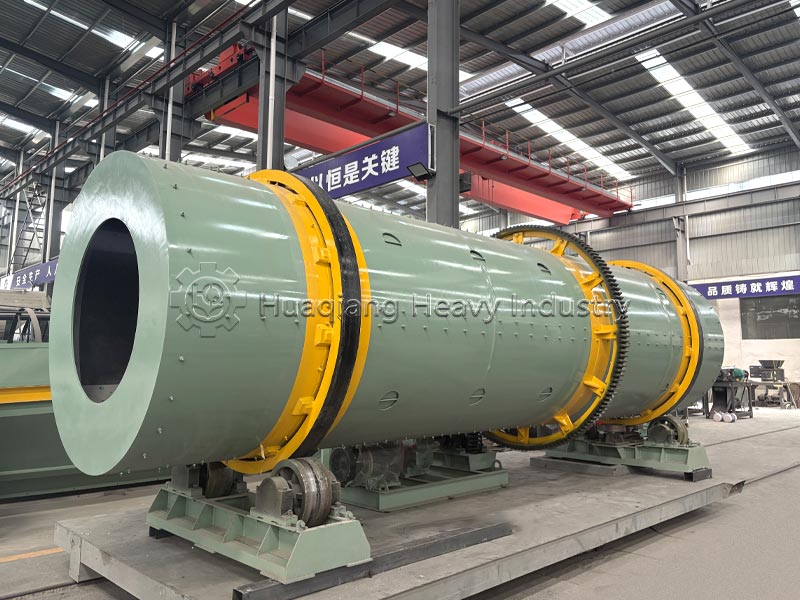
The finished product effects and applications differ significantly. Rotary drum granulators produce round, uniform, and high-hardness granules, suitable for high-end commercial organic fertilizers and fertilizers specifically for cash crops. New type organic fertilizer granulators produce loose and breathable granules, effectively preserving the activity of microbial strains, making them suitable for bio-organic fertilizer production. The only drawback is that the granule uniformity is relatively average.
In terms of production and operation, rotary drum granulators offer stable operation and support continuous mass production, making them suitable for medium to large-scale production lines. However, their material pretreatment processes are cumbersome. The new granulator, on the other hand, features a simpler structure, is less prone to clogging, has lower maintenance costs, is easier to operate, and has a lower entry barrier, making it more suitable for small to medium-sized processing plants and individual producers.
In summary, rotary drum granulators are the preferred choice for large-scale compound organic fertilizer production; however, small to medium-sized production lines primarily processing bio-organic fertilizers and pure organic materials are better suited to using the new type organic fertilizer granulator.