Both trough-type and self-propelled composting machines are core organic fertilizer production equipment in organic fertilizer production lines, but they differ significantly in their applicable scenarios and operating characteristics. Producers need to make precise selections based on their production scale and site conditions to maximize fermentation efficiency.
In terms of applicable scenarios, trough-type composting machines are designed for fixed, large-scale operations and require the construction of fermentation troughs. They are suitable for large-scale organic fertilizer production lines or long-term fixed-site production, and can accommodate large-volume continuous fermentation needs. Self-propelled composting machines do not require fixed facilities and can operate flexibly in open areas, making them more suitable for small and medium-sized farms, decentralized organic fertilizer production scenarios, or the fermentation of temporarily stored raw materials.
In terms of operating efficiency and environmental protection, trough-type composting machines offer deep and uniform turning, enabling continuous operation. The enclosed trough design effectively controls odors and dust, resulting in better environmental performance, but the equipment has limited mobility. Self-propelled composting machines are highly mobile and easy to move between sites, quickly covering large areas of raw materials, but the turning depth is limited, and open-air operation can easily generate dust.
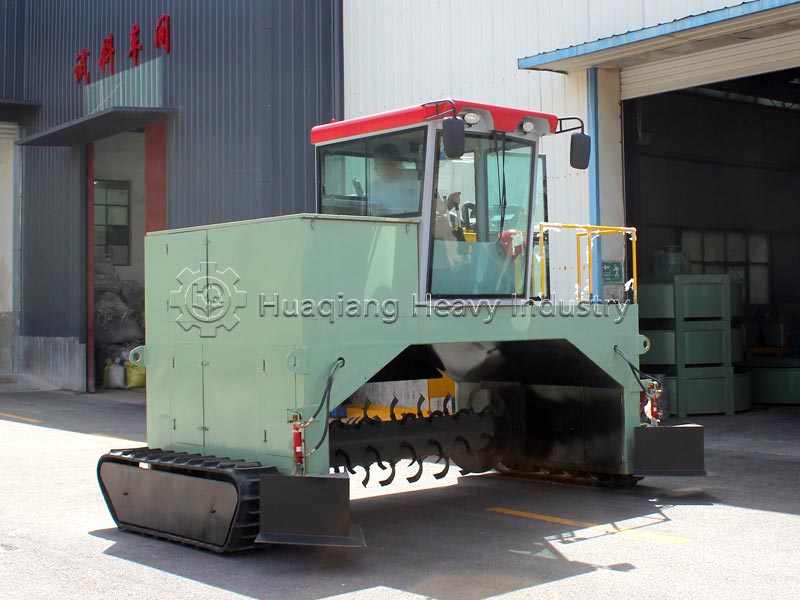
Regarding operating and maintenance costs, trough-type composting machines have higher initial equipment and fermentation trough construction costs, but later maintenance is simple and energy consumption is stable, making them suitable for long-term large-scale production. Self-propelled composting machines have lower initial investment, but if used for long-term high-intensity operations, equipment wear and energy consumption costs are relatively higher, making them more suitable for intermittent production needs.
In summary, for large-scale, fixed-site production, trough-type composting machines are preferred, while self-propelled composting machines are more suitable for small and medium-sized, flexible production. Choosing the right equipment based on your specific needs will allow your organic fertilizer production equipment to deliver maximum value.