
Livestock manure is rich in nutrients and is a high-quality organic fertilizer raw material. However, direct composting can easily lead to problems such as odor, incomplete composting, and the growth of pathogens. Mastering the following key points can efficiently transform it into high-quality organic fertilizer, allowing even beginners to easily avoid pitfalls.
First, proper pretreatment of raw materials. Remove impurities such as stones and plastics from the manure. If the moisture content is too high, add dry straw, sawdust, or other carbon sources to dilute it, controlling the moisture content to 50%-60%. A compost turning machine can be used to assist in mixing later to prevent oxygen deficiency and foul odors.
Second, strict control of the carbon-to-nitrogen ratio and temperature/humidity. Use appropriate carbon source materials to adjust the carbon-to-nitrogen ratio to 25:1-30:1; maintain the composting temperature at 55-65℃; and use an organic fertilizer compost turning machine to regularly turn the compost to replenish oxygen and kill pathogens.
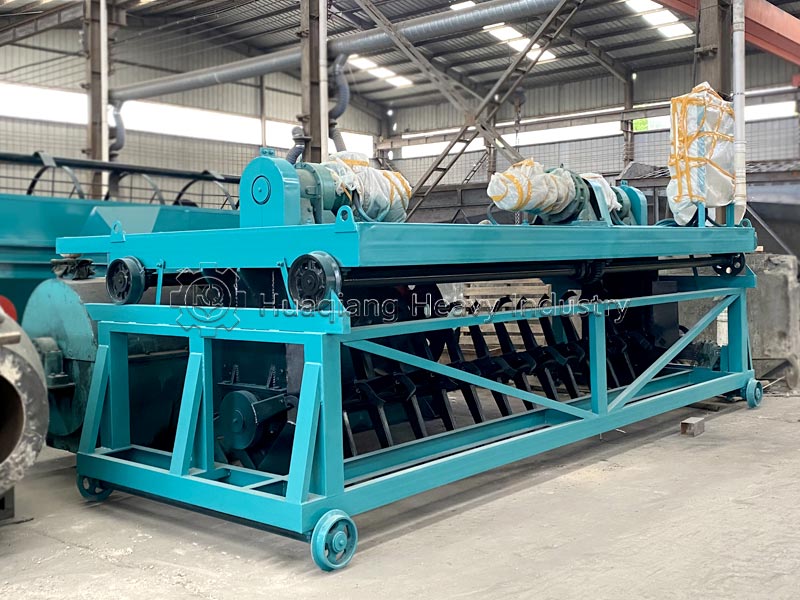
Third, avoid odors and secondary pollution. Leave ventilation gaps in the stacks and keep them away from water sources and residential areas. Use a compost turning machine to regularly turn the manure, and add microbial agents to accelerate fermentation, reduce odor, and prevent maggot growth.
Fourth, accurately determine the degree of composting and store it properly. Well-composted manure should have no foul odor, be black and loose, and be stored in sealed containers to prevent nutrient loss. Never apply uncomposted manure directly to avoid burning roots.
In summary, by following the four key points of pretreatment, controlled proportions, pollution prevention, and strict composting, livestock manure can be transformed into high-quality organic fertilizer, achieving resource utilization of waste.