
Ring die pelleting machines and new type organic fertilizer granulators are two mainstream molding equipment in organic fertilizer production. They differ significantly in molding principles, finished product quality, raw material compatibility, and applicable scenarios.
The molding processes and finished product effects of the two types of equipment differ markedly. Ring die pelleting machines use high-pressure extrusion molding, producing granules with high density, sufficient hardness, and resistance to pulverization, exhibiting excellent uniformity and suitability for long-term storage and long-distance transportation. New type organic fertilizer granulators use wet rolling agglomeration molding, producing round, fluffy granules with good air permeability, but the granules have lower hardness, making them prone to slight powdering during long-distance transportation.
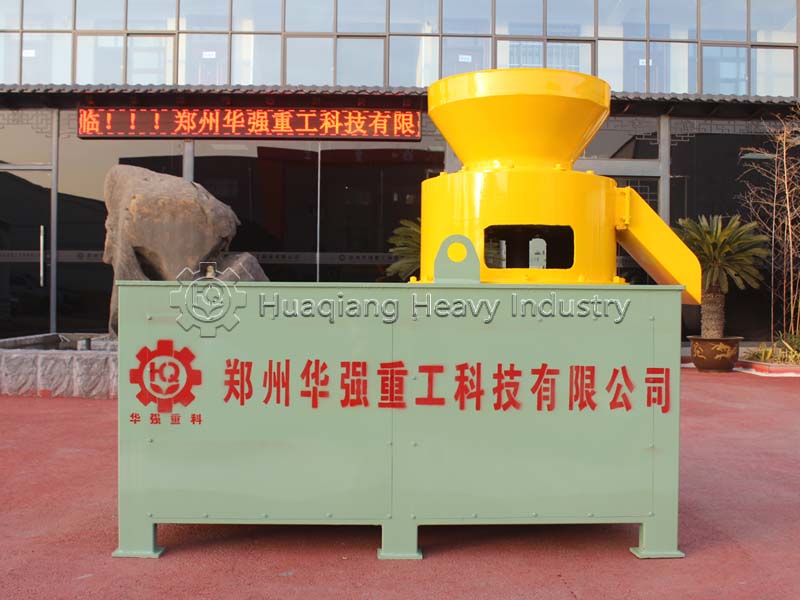
Regarding raw material compatibility, new type organic fertilizer granulators have a higher tolerance for error, with less stringent requirements on material fineness and moisture content. They can handle slightly agglomerated conventional organic materials, and the pretreatment process is simpler. Ring die pelleting machines have strict material standards, requiring materials with uniform fineness and stable moisture content, and pre-screening to remove hard lumps and impurities.
In terms of application scenario suitability, ring die pelleting machines are suitable for medium to large-scale standardized production lines, ideal for the mass production of high-quality organic fertilizers, primarily targeting high-grade commercial fertilizers. The new granulator offers simpler operation and maintenance, lower energy consumption, and lower investment costs, making it more suitable for small to medium-sized processing plants and production scenarios with complex material types.
In summary, ring die pelleting machines are the preferred choice for large-scale high-quality production; while the new organic fertilizer granulator is more suitable for small to medium-sized production, budget-constrained scenarios, and complex material applications.