
The selection of forming equipment for an NPK compound fertilizer production line is crucial to the line’s operating efficiency, production costs, and finished product quality. Fertilizer compactors and disc granulators are core forming equipment in compound fertilizer production, but their forming principles differ.
In terms of process compatibility, the two types of equipment differ significantly. Fertilizer granules compaction uses dry extrusion forming, eliminating the need for water addition and drying processes. This results in a shorter process flow, fewer equipment requirements, and lower energy consumption, making it suitable for short-process, simple NPK production lines. NPK disc granulators use wet agglomeration granulation, requiring water addition during production. After forming, drying and cooling equipment is essential, making them suitable for complete standardized production lines.
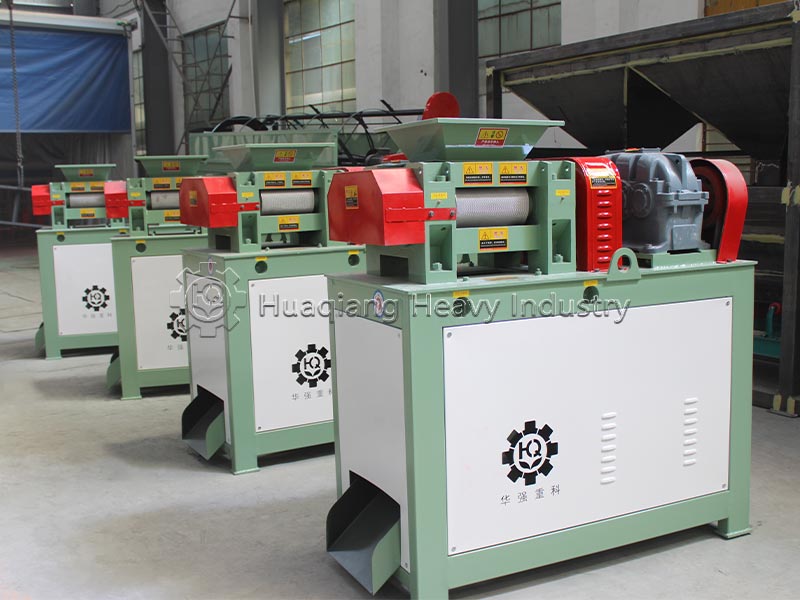
Their raw material formulation compatibility also differs. Compactors are suitable for dry powder materials and can process high-concentration, complex-ratio NPK powders without humidification. NPK fertilizer disc granulators require higher material uniformity and are only suitable for mixed powders with controllable humidity and regular ratios, making them more suitable for processing medium- and low-concentration NPK fertilizers.
There is a significant difference between production capacity and finished product performance. Compactors are suitable for small to medium-sized customized production lines, allowing for flexible switching of fertilizer formulations and producing granules with high hardness and good moisture resistance. NPK disc granulators support continuous, high-volume production, producing round, uniform granules with excellent appearance, making them more suitable for commercially exported NPK fertilizers.
In summary, fertilizer granules compaction machines are suitable for short-process, high-concentration, customized NPK production; while NPK disc granulators are more suitable for standardized, large-scale production lines that prioritize a premium appearance.