
In an organic fertilizer production line, the compatibility of equipment across stages—from initial fermentation to final shaping—directly determines efficiency and product quality. Compost turners decompose raw materials into uniform organic matter, while granulators transform this decomposed material into marketable granules. Large wheel compost turning machines and crawler-type compost making machines each have specific use cases; the choice depends primarily on site conditions.
Large wheel compost turning machines offer a turning width of up to 30 meters and a depth of 1.5–3 meters, with energy consumption approximately 70% lower than traditional equipment, making them ideal for large plants with annual capacities exceeding 100,000 tons. In contrast, crawler-type compost making machines utilize rubber tracks to prevent slipping or sinking on wet, soft ground and can execute 180-degree turns in place, making them suitable for sites with unpaved surfaces or high rainfall. Ultimately, selecting the right turning equipment is a matter of adapting to the operational environment.
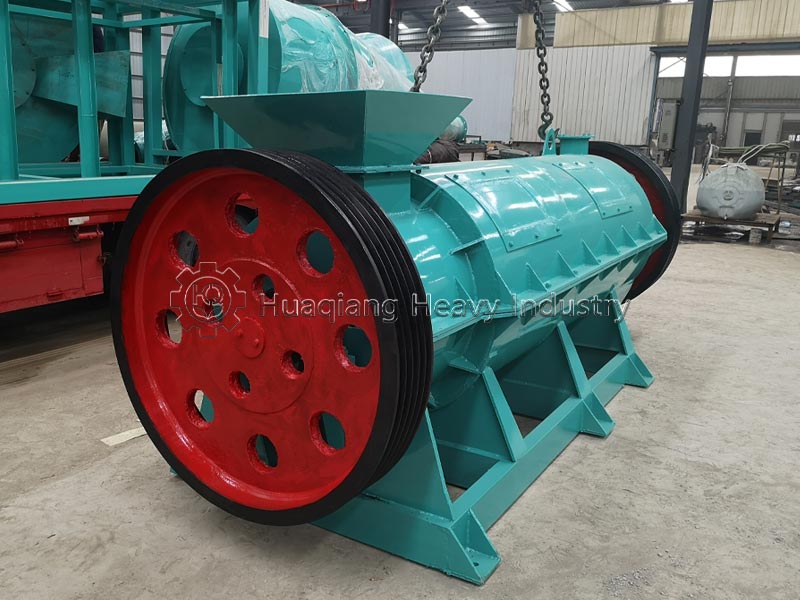
The moisture content, fineness, and uniformity of the decomposed material—achieved after the turning process—directly impact the subsequent granulation results. Modern new type organic fertilizer granulators employ high-speed agitation and aerodynamic forces to continuously mix, granulate, and spheroidize the material within the machine. They accommodate moisture levels between 20% and 50%, enabling pellet formation without additional binders and achieving a granulation rate exceeding 90%. This eliminates the need for intensive drying after fermentation, significantly simplifying the production process.
Windrow turning determines fermentation quality, while granulation dictates the product’s physical form. Inadequate turning makes it difficult to produce high-quality granules, regardless of how advanced the granulator is; conversely, improper granulator selection undermines the investment made in the turning stage. A rational equipment setup follows the principle of “site dictates turning method, material dictates granulation method.” Only through such synergy between the upstream and downstream stages can the entire line consistently produce high-quality organic fertilizer.