
In an organic fertilizer project, the organic fertilizer granulation machine is the core piece in the entire production line. However, many buyers focus solely on the machine itself, overlooking the reliability of the fertilizer machine manufacturers behind it—a factor that is crucial when integrating the complete set of organic fertilizer manufacturing machine.
When selecting a manufacturer, you should look beyond the price quote and consider three less obvious but vital dimensions.
First is the ability to match the equipment to the process. Determining whether a granulator suits your raw materials requires more than just looking at capacity specifications. For instance, the pelletizing performance of a disc granulator depends heavily on the raw material’s moisture content, fiber content, and degree of decomposition. A responsible manufacturer will ask detailed questions about raw material sources, fermentation methods, and processing volumes—or even conduct small-scale pilot tests—rather than simply recommending a generic model. If a supplier provides a quote based only on the desired output capacity, there is a significant risk of incompatibility later on.
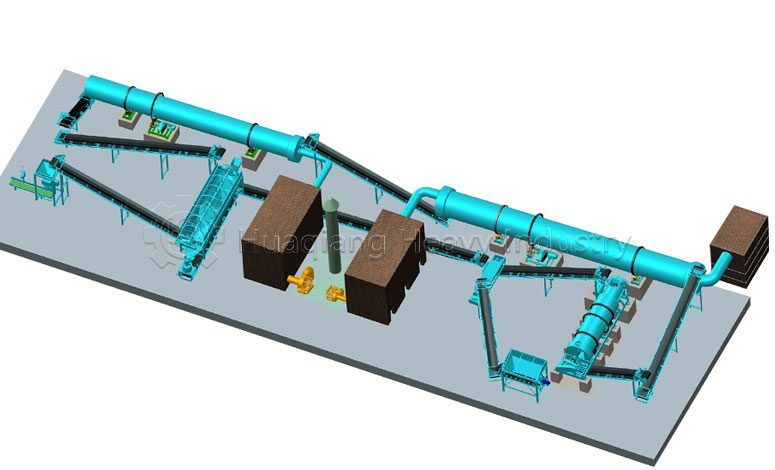
Second is experience in designing the entire production line. Organic fertilizer production involves multiple stages, including crushing, mixing, granulating, drying, screening, and packaging. If a manufacturer specializes only in granulators without understanding the upstream and downstream processes, the line’s capacity may become unbalanced—for example, a granulator capable of producing 3 tons per hour might be starved if the crusher can only supply 1 ton, drastically reducing the line’s actual output. A manufacturer with full-line design expertise can recommend the optimal equipment configuration for each stage based on your site conditions and process requirements.
Third is the assurance of after-sales service and spare parts. Fertilizer equipment operates under high-wear conditions; components such as granulator discs, stirring teeth, and die plates require periodic replacement. A reliable manufacturer maintains an adequate inventory of spare parts and a responsive after-sales team to minimize equipment downtime. Before signing a contract, you should verify the lead times for wear parts and conduct an on-site visit to the manufacturing workshop; production scale and management standards are often reliable indicators of a company’s overall capabilities.
In summary, when purchasing a granulator, you should not only compare the price of the individual machine but also evaluate the manufacturer’s expertise in process matching, full-line design, and after-sales support. A high-quality machine combined with a reliable partner provides the dual assurance needed for the smooth operation of an organic fertilizer project.