
Both chain compost turning machines and large wheel compost turning machines are mainstream equipment for large-scale organic fertilizer composting, but they differ significantly in structure, performance, and suitable application scenarios. Understanding these differences is crucial for accurate selection and avoiding resource waste.
In terms of structure and operation, chain compost turning machines use chain drive as their core and rely on a fixed deep trough for operation. They turn materials layer by layer using a linked chain plate, ensuring even turning without dead corners. Large wheel compost turning machines, on the other hand, use a large disc as their core and employ a windrow-style operation, eliminating the need for a fixed trough and allowing for greater mobility.
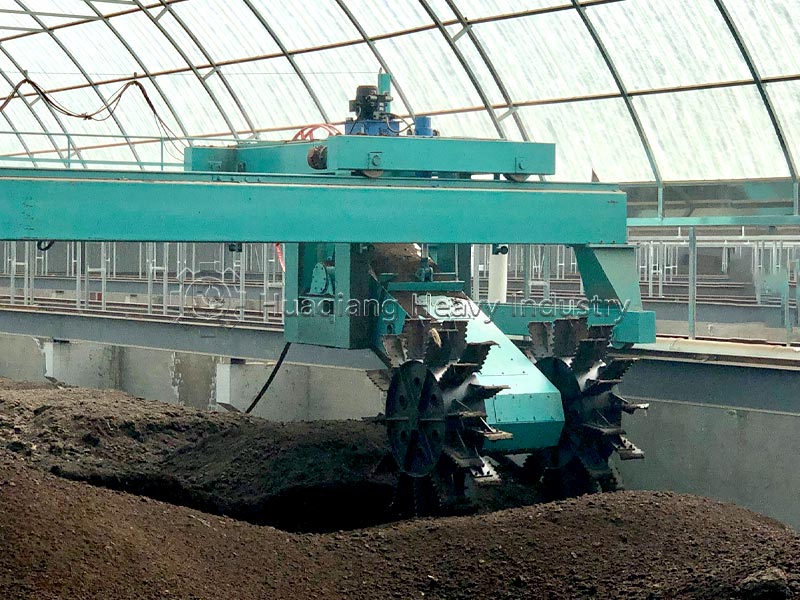
In terms of performance, chain compost turning machines have low energy consumption and provide even turning, making them suitable for handling high-moisture materials and deep-trough fermentation, especially when high uniformity of composting is required. Large wheel compost turning machines offer high operating efficiency and wide coverage, enabling rapid processing of large batches of materials, but their turning depth is limited, leading to uneven composting of the bottom layer.
In terms of suitable application scenarios, chain compost turning machines are suitable for large-scale, standardized composting, requiring pre-planned fixed deep trenches and are suitable for scenarios with high requirements for uniform composting. Large wheel compost turning machines are suitable for large-area windrow composting, requiring no fixed site and suitable for temporary or large-scale batch operations.
In summary, chain compost turning machines are the choice for those seeking deep trench fermentation and uniform composting; large wheel compost turning machines are the choice for those seeking high efficiency, speed, and flexible adaptability. Choosing the right model based on your own site, scale, and quality requirements will maximize the value of the equipment.