
Both double screws compost turning machines and large wheel compost turning machines are commonly used equipment in large-scale composting, but their suitable working scenarios differ significantly. Understanding the appropriate scenarios is crucial for accurate equipment selection and maximizing equipment value.
In terms of production scale, large wheel compost turning machines are suitable for large-area, high-volume windrow composting, requiring no fixed site and offering high efficiency, making them suitable for medium- and large-scale batch operations. Double screws compost turning machines are more suitable for medium-scale continuous operations, where ultra-high capacity is not the primary concern, but rather the uniformity of composting.
Regarding material compatibility, double screws compost turning machines are suitable for high-moisture, sticky, and easily agglomerated materials, thoroughly breaking them up and mixing them uniformly to meet the needs of refined pretreatment. Large wheel compost turning machines are more suitable for loose, non-agglomerated materials, offering faster turning speeds and meeting basic pretreatment needs.
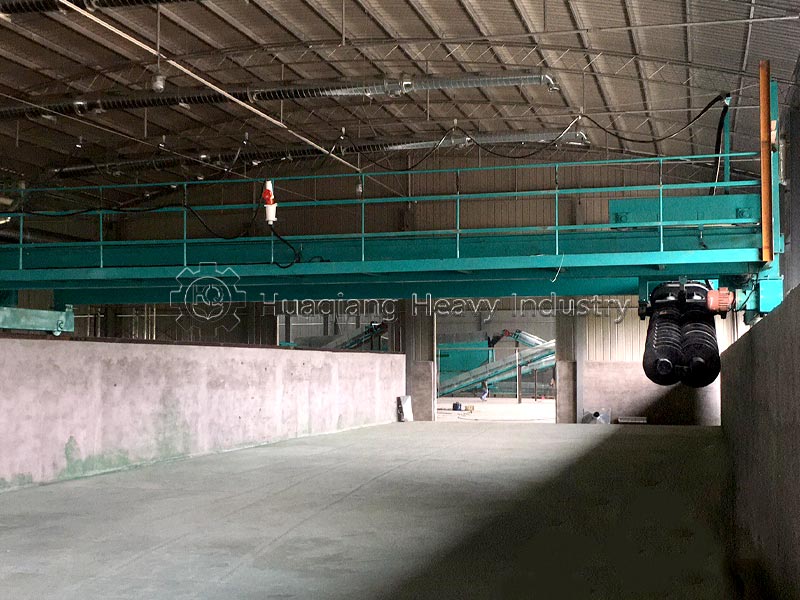
Regarding site requirements and composting conditions, the large wheel compost turning machine requires no fixed site, making it suitable for temporary composting and open areas, while also meeting basic composting uniformity needs. The double screws compost turning machine, on the other hand, requires a fixed site and is suitable for scenarios with high composting quality requirements, enabling deep turning and improving the quality of organic fertilizer.
In summary, the large wheel compost turning machine is suitable for large-scale, batch operations with flexible site conditions; the double screws compost turning machine is suitable for medium-scale operations, materials that are sticky and heavy, and where refined composting is desired. Choosing the appropriate model based on your specific scenario will maximize the equipment’s value.