
Faced with complex organic waste, modern organic fertilizer production equipment demonstrates exceptional adaptability. From livestock manure to crop straw, from kitchen waste to food industry byproducts, these machines achieve efficient conversion of various raw materials through targeted process adjustments.
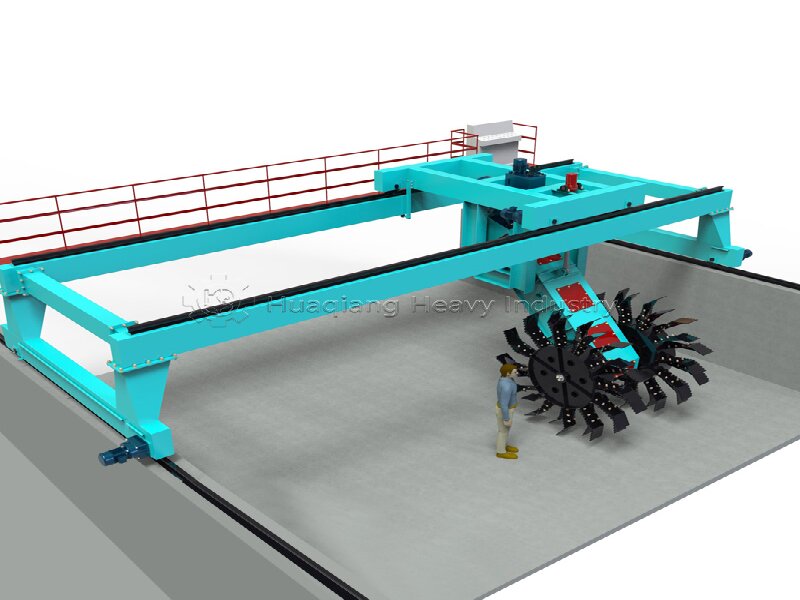
In the raw material pretreatment stage, the large wheel compost turning machine, with its unique operating method, becomes the core equipment in the fermentation process. This equipment, combined with an intelligent ventilation and temperature control system, can automatically adjust operating parameters based on real-time monitoring data, ensuring that different raw materials achieve ideal composting results.
The equipment configuration in the granulation stage exhibits diverse characteristics. The rotary drum granulator, with its gentle agglomeration granulation method, demonstrates unique advantages in processing organic raw materials. The ring die pelleting machine, through the precise coordination of the die and pressure rollers, produces granules with higher density and greater strength. For processing special raw materials, fertilizer compaction machines offer another reliable option; their dry forming process is particularly suitable for materials with high fiber content.
In the post-processing stage, intelligent drying and cooling systems work perfectly in conjunction with the front-end granulation equipment. Whether producing spherical granules from a rotary drum granulator or cylindrical granules from a ring die pelleting machine or fertilizer compaction machine, all can achieve ideal physical states through a precise temperature control system.
With the deepening of the concept of resource recycling, modern organic fertilizer production equipment is continuously improving its environmental performance. The new generation of equipment, through the integration of advanced sensing technology and intelligent control systems, achieves more precise processing of complex raw materials, opening up broader prospects for the resource utilization of organic waste.