
Agricultural composting is a core method for the resource utilization of waste materials such as livestock manure and crop stalks. As the central piece of equipment for the composting and fermentation process, the compost turner directly determines the rate of decomposition and the quality of the finished product. For agricultural applications, a turner with the highest specifications is not necessarily the best choice; the most suitable equipment is one that aligns with actual operational needs. Such equipment typically possesses three core characteristics.
First, it offers strong site adaptability. Unlike industrial composting conducted in fixed factory workshops, agricultural composting takes place in diverse and flexible settings, ranging from designated composting zones at livestock farms to temporary composting sites directly in the fields. A highly adaptable turner requires no complex infrastructure and can operate on uneven, open-air ground. Some models can even be easily relocated between sites, eliminating the need for facility construction costs and meeting the agricultural sector’s preference for low-investment, lightweight production setups.
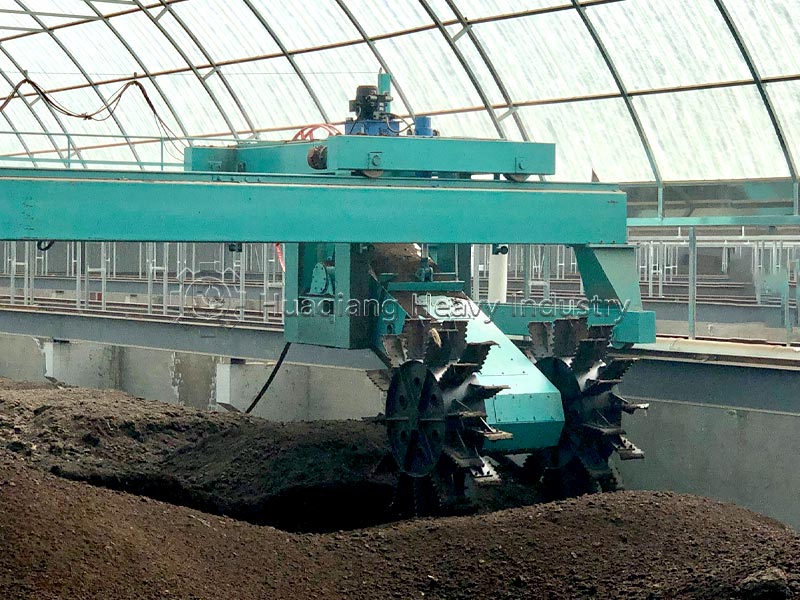
Second, it demonstrates high compatibility with raw materials. Agricultural composting involves a wide variety of feedstocks with vastly different physical properties—such as high-moisture livestock manure, tangle-prone crop stalks, and vegetable waste or spent mushroom substrate with uneven moisture content—often with limited pre-treatment capabilities. A high-quality agriculture compost turning machine can handle materials of varying moisture levels and viscosities without frequent clogging or tangling. It integrates turning, aeration, and material breaking into a single process, eliminating the need for extensive pre-treatment and significantly reducing initial processing costs.
Third, it entails low operation and maintenance costs. Most agricultural operators lack professional experience in equipment maintenance. An ideal compost turner features simple operating logic that is easy to master with minimal training. It also boasts a low failure rate and allows for easy replacement of wear parts, requiring no complex technical expertise for daily maintenance. Furthermore, efficient energy management—resulting in low fuel or electricity consumption—helps effectively minimize long-term operating expenses.
In summary, determining the suitability of an agriculture compost turning machine depends not on how advanced its technical specifications are, but on its ability to meet the specific demands of agricultural environments—offering ease of use, ease of maintenance, and cost-effectiveness.