
Windrow composting is a classic method for organic fertilizer fermentation. Its simplicity, efficiency, and adaptability make it widely applicable in organic waste treatment and organic fertilizer production. Balancing practicality and economy, it is the preferred choice for small- and medium-sized production and individual farmer composting. Its advantages and applications are worth understanding.
Its core advantages are:
1.Low cost: No complex sealed facilities are required, and equipment investment is minimal, requiring only simple tools or an organic fertilizer compost turning machine.
2.Easy operation: The process is simple and requires no professional personnel; farmers and small- and medium-sized producers can quickly master it.
3.High adaptability: It can process various organic materials, has flexible site requirements, and allows for flexible adjustment of stack dimensions.
4.Controllable composting: Regular turning (which can be combined with a windrow compost turning machine) regulates temperature and humidity, ensuring thorough composting and improving the quality of the organic fertilizer.
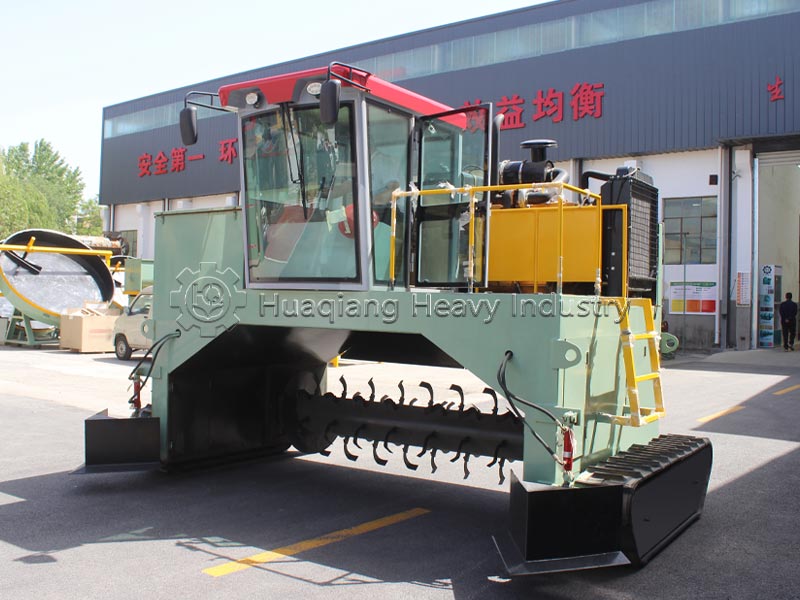
With wide-ranging applications, windrow composting technology can process straw and livestock manure in farmers’ planting, producing organic fertilizer to improve soil. In small to medium-sized organic fertilizer production, it can serve as a core fermentation process, connecting to the early composting stage of organic fertilizer production lines. In organic waste treatment, it can efficiently process solid organic waste, turning waste into treasure and meeting environmental protection requirements.
In summary, windrow composting technology, with its advantages of low cost, ease of operation, and high adaptability, has become the mainstream technology for organic fertilizer fermentation. It can meet the needs of different scales of production, promote the resource utilization of organic waste, and possess both practical and environmental value.