
Hydraulic trough compost turning machines and large wheel compost turning machines are standard equipment for large-scale composting operations; however, they differ significantly in their operational logic and the scenarios for which they are best suited.
Operational Modes and Site Requirements: The hydraulic trough compost turning machine specializes in fixed-position, trough-based operations. It requires a dedicated fermentation trough to function; with its stationary chassis and precise turning mechanism, it is ideal for sites with a regular layout and for long-term, fixed-location composting. This design effectively prevents material spillage and is well-suited for processing high-moisture, viscous materials.
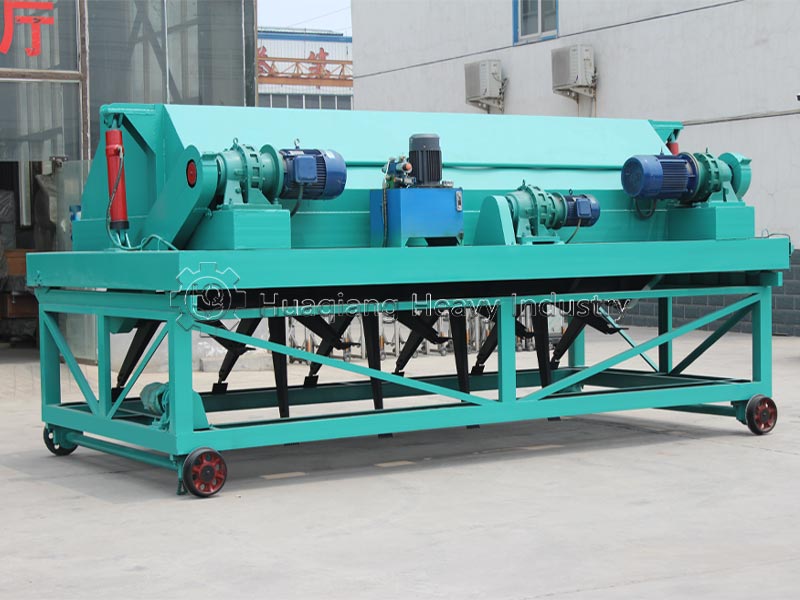
Core Advantages and Material Suitability: The hydraulic trough turner relies on hydraulic power to generate substantial turning force, making it highly effective for processing heavy, viscous materials such as pig manure and municipal sludge. In contrast, the large wheel compost turner specializes in mobile, windrow-style operations; it does not require a fixed site and is better suited for processing loose or high-volume materials—such as crop straw and cattle manure—offering superior operational efficiency.
Operation and Maintenance: The hydraulic trough compost turning machine features a precision-engineered structure that requires diligent maintenance of its hydraulic system. The large wheel model, on the other hand, offers simple operation, a low failure rate, and convenient maintenance, making it a more suitable choice for novice operators or for scenarios where high operational efficiency is the primary objective.
In Summary: The hydraulic trough compost turner is best suited for fixed-site operations and precision-controlled fermentation, while the large wheel compost turning machine is ideal for mobile operations and large-scale processing. By carefully selecting the appropriate machine based on the specific composting site and material type, operators can ensure highly efficient and effective composting operations.