
In organic fertilizer production, granulation failure—characterized by excessive fines and granules that crumble at the slightest touch—is a headache for many manufacturers. The root cause often isn’t the quality of the equipment, but rather the selection of the wrong technical route at the outset. The key lies in finding the specific organic fertilizer granulation machine that suits your particular raw materials.
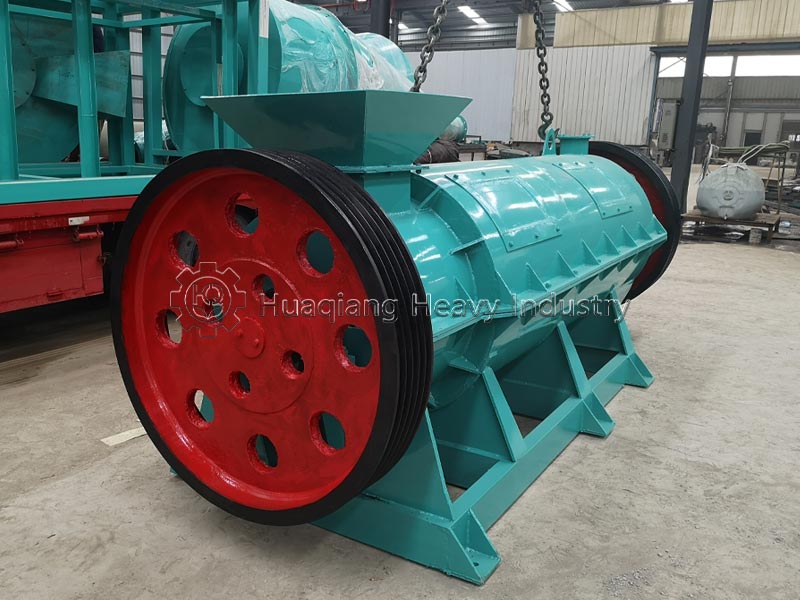
Moisture content is the first deciding factor. For materials with 25%–35% moisture and moderate stickiness, a disc granulator offers the best cost-performance ratio. For high-moisture materials (30%–50% moisture), a new type organic fertilizer granulator is more suitable; it uses high-speed rotating teeth to shear and agglomerate the material. It requires no pre-drying, achieves a pelletizing rate of over 90%, produces spherical granules with low crumbling rates, and is particularly ideal for livestock and poultry manure.
Fiber content is the second key indicator. For materials with high coarse fiber content and poor binding properties—such as straw or rice husks—a flat die pelleting machine is the safer choice. It employs a dry cold-pressing process, forcing material through die holes via pressure rollers; it requires no binders or subsequent drying, making it especially suitable for processing pure organic matter and coarse-fiber raw materials.
The cost dynamics differ between dry and wet methods. Wet granulation can process high-moisture materials directly, but the resulting granules still contain 25%–35% moisture, necessitating the addition of dryers and coolers, which results in a longer production line and higher energy consumption. Dry granulation eliminates the drying stage but requires material moisture to be controlled within the 10%–15% range; this results in a shorter process flow and a smaller footprint.
In summary, conducting a trial run with your own raw materials is far more important than blindly comparing prices; choosing the right technical route is more effective than simply opting for expensive equipment.