
Straw composting often presents challenges such as slow maturation, clumping, and poor heat retention. For small-scale settings—such as family farms and small-scale cultivation bases—there is no need to invest in high-end machinery; a simple trough compost turning machine serves as the optimal choice. With its simple structure, low cost, and user-friendly operation, even beginners can quickly master the equipment, making the efficient recycling of straw resources easily achievable.
The core advantages of the simple trough compost turning machine are perfectly tailored to the specific characteristics of straw composting. Since straw is loose in texture and high in carbon content, it requires centralized composting to retain heat; this device works directly in conjunction with simple fermentation troughs. It applies a moderate turning force that effectively breaks up straw clumps while simultaneously mixing the straw evenly with auxiliary materials—such as livestock and poultry manure—to introduce oxygen. This process significantly accelerates the rate of maturation and prevents the anaerobic decomposition that leads to foul odors.
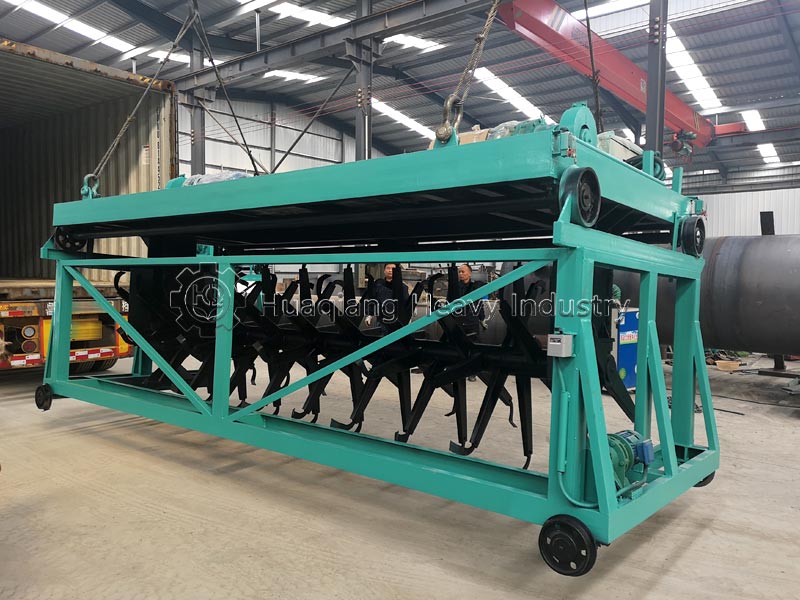
Three key points require attention during practical operation: First, the straw must be shredded and mixed with auxiliary materials according to a specific ratio to properly adjust the carbon-to-nitrogen ratio. Second, the dimensions of the fermentation trough must be compatible with the equipment to ensure that the turning process covers every corner without leaving any dead zones. Third, the compost should be turned once every 3 to 5 days to prevent the straw from becoming moldy.
Compared to large-scale turning machinery, this device requires no complex installation or maintenance, occupies minimal space, and costs only a fraction of the price of larger equipment. Furthermore, it can be operated by a single person, thereby drastically reducing labor requirements.
In summary, the simple trough compost turning machine is perfectly suited for small-scale straw composting operations. Leveraging its advantages of low cost and ease of use, it effectively resolves the core pain points associated with straw composting, empowering small-scale producers to transform straw waste into valuable resources and produce high-quality organic fertilizer.