
Oil palm empty fruit bunches (OPEFB) are characterized by high fiber content and a dense structure, placing specific demands on windrow turning equipment. When processing this material, large wheel compost turning machines, crawler-type compost production machines, and specialized palm tree waste compost making machines each offer distinct advantages; understanding these differences is essential for making the right choice.
Large wheel compost turning machines are common in palm composting facilities. They move along windrows on steel wheels, offering a turning width of over 3 meters and a depth of 1.5 to 3 meters, while effectively shearing and dispersing the fibrous material. With a simple design and readily available parts, they entail lower investment and maintenance costs, making them ideal for sites with hardened ground surfaces.
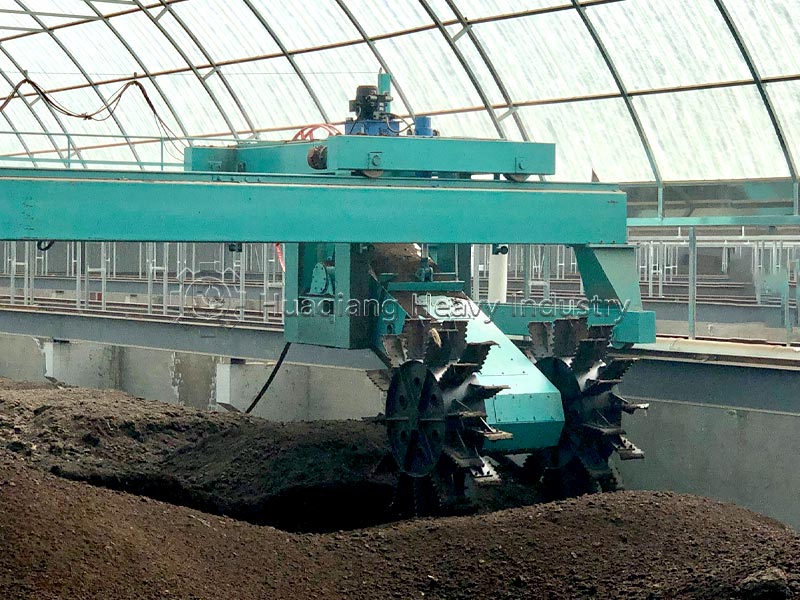
Crawler-type compost production machines effectively address the limitations of wheeled models. Moving on rubber tracks, they exert low ground pressure, allowing for stable operation on muddy plantation soil or slippery, wet composting sites without slipping or sinking. Their ability to turn in place makes them suitable for compact areas. They generally offer greater turning depth and power than comparable wheeled models, enabling them to penetrate the palm fiber pile in a single pass.
Specialized palm tree waste compost making machines are refined versions of general-purpose models. Typically equipped with heavy-duty cutter drums and forced-feeding mechanisms, they are designed to handle the tangling and jamming issues caused by highly resilient fibers, breaking large fiber chunks down to a size suitable for composting and accelerating decomposition.
Selection should be based on three factors: choose crawler models for muddy or rainy conditions, while wheeled models are suitable for sites with hardened surfaces; opt for specialized models for higher efficiency when processing palm fiber alone, whereas general-purpose models offer greater flexibility when mixing in other materials. Each type has its own ideal application; the key is identifying the option that best aligns with your specific operational conditions.