
The fundamental difference between bio-fertilizers and conventional organic fertilizers lies in the survival of functional live microorganisms. This imposes equipment required for bio-fertilizer production selection; standard machinery is often unsuitable for the task.
The core requirements for bio-fertilizer equipment can be summarized by three principles: low-temperature operation, gentle processing, and cleanliness. Conventional high-temperature dryers (with inlet temperatures exceeding 300°C) would instantly kill the microbial strains, while the frictional heat generated by high-speed crushing and mixing would similarly reduce the activity of the microbial agents. Consequently, equipment selection must fundamentally avoid these issues. A typical configuration includes: a fermentation turner for oxygenation and decomposition; a crusher to break down materials; a low-speed mixer for the uniform incorporation of microbial agents; and a granulator for shaping, complemented by a low-temperature drying unit (maintaining temperatures below 60°C).
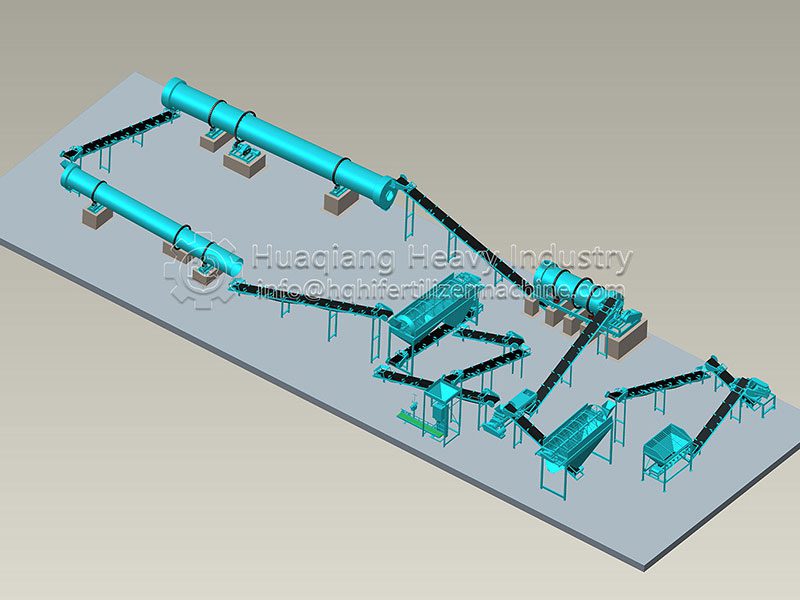
These units are seamlessly integrated to form a complete bio-organic fertilizer production line. A standard line encompasses systems for fermentation, crushing, proportioning, mixing, granulation, low-temperature drying, screening, and packaging, with each stage connected by conveyors and bucket elevators. The process begins with a turner decomposing raw materials over 15–25 days, followed by intermediate crushing, mixing, and granulation, and concludes with low-temperature drying, screening, and packaging. The level of automation across the line directly impacts batch consistency; fully automated lines can increase efficiency by approximately 30% compared to semi-automated ones.
Beyond equipment selection, the choice of manufacturer is equally critical. A reliable fertilizer machine manufacturer should possess system integration capabilities, offering end-to-end services—from process design to equipment customization—tailored to specific raw materials and production capacity requirements. High-quality equipment combined with a partner who understands the production process provides the dual assurance needed for the long-term, stable operation of a bio-fertilizer project.