
As the organic fertilizer industry moves toward commercialization and refined production, the pace of innovation in granulation equipment has accelerated. Many industry professionals frequently encounter the label “new type organic fertilizer granulator” without fully understanding how it improves upon traditional models. In reality, the “newness” of these granulators lies not in aesthetic changes, but in practical optimizations of core performance designed to address specific production pain points.
First, they offer broader raw material compatibility. Traditional granulators impose strict requirements regarding raw material moisture and viscosity; materials such as fresh livestock manure or high-moisture fermentation residues are difficult to pelletize directly, necessitating pre-drying and multiple conditioning steps that drive up the cost of preliminary processing. New granulators feature optimized pelletizing structures tailored to the characteristics of organic materials, enabling the direct processing of high-moisture, high-viscosity decomposed materials. This eliminates certain pre-treatment steps and significantly lowers the barrier to entry for small and medium-sized production lines.
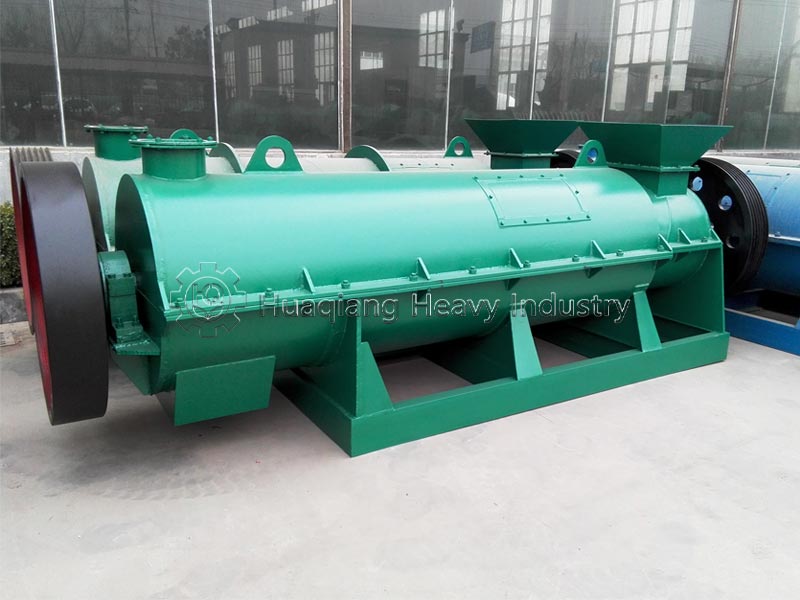
Second, they deliver superior pellet quality and production efficiency. By optimizing the core forming mechanism, new granulators achieve a pelletization rate exceeding 90%. The resulting granules are uniform in size and possess moderate hardness—making them resistant to breakage—which reduces energy consumption associated with reprocessing “fines” (returned material) while enhancing the product’s appearance and durability during storage and transport, thereby meeting the demands of commercial sales.
Third, they offer lower energy consumption and reduced operation and maintenance costs. These granulators feature lightweight structural designs, and critical wear parts are made from wear-resistant alloys, significantly extending their service life. Overall power consumption is reduced by approximately 20%, and dust generation during operation is minimized, ensuring better compliance with environmental protection standards.
In summary, the “newness” of these new type organic fertilizer granulators represents a practical upgrade across the entire production process rather than a mere marketing gimmick; it aligns closely with the industry’s core objectives of reducing costs and increasing efficiency.