
During the composting process, the frequency of use of the compost turner directly affects the composting efficiency, with the windrow compost turning machine being the most frequently used model. It can be seen in everything from small family farms and medium-sized livestock farms to large-scale organic fertilizer production lines.
The core reason for its high frequency of use is its superior adaptability to various environments. Composting sites are often soft, muddy areas, and the tracked design provides excellent traction, allowing for stable operation without the need for leveling the site. This avoids the slippage and getting stuck problems of wheeled equipment, making it suitable for various complex environments – something that fixed trough-type or simpler models cannot match.
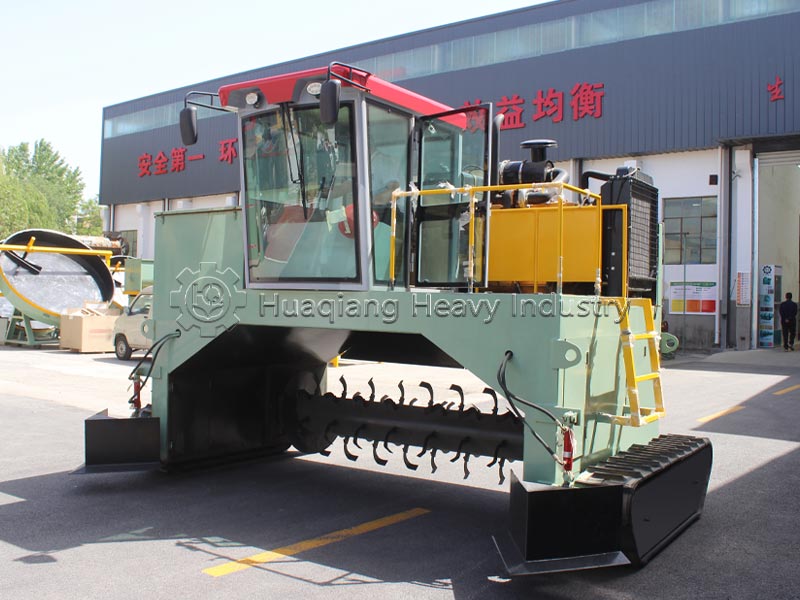
Secondly, it is suitable for various materials and scales. Whether it’s straw, livestock manure, or highly moist, sticky sludge, it can efficiently turn and break up clumps. The turning depth and frequency can be flexibly adjusted, meeting the needs of small-scale, small-batch composting by individual farmers as well as large-scale, continuous operations, balancing flexibility and efficiency.
Furthermore, its ease of operation and maintenance lowers the barrier to entry. No professional skills are required; one person can operate it. Maintenance is simple and requires no complex investment. It doesn’t rely on fixed sites or equipment and can be deployed at any time, perfectly meeting the turning needs at all stages of composting.
In summary, the windrow compost turning machine, with its wide adaptability, strong material compatibility, and ease of operation, has become the most frequently used compost turner, efficiently meeting the turning needs of various composting scenarios.